

Ah stands for Amp-hours, a critical rating that measures the total energy capacity of your car battery. By understanding what does Ah on a battery mean, you can ensure your vehicle has the reliable power it needs for long drives and modern electronic demands.
Key Takeaways
- Capacity Measurement: Ah indicates how much current a battery can supply over a specific period, usually twenty hours.
- Vehicle Compatibility: Matching the correct Ah rating to your car’s manufacturer specifications is vital for alternator health.
- Cold Cranking Amps vs. Ah: While CCA handles starting the engine, Ah determines how long the battery sustains electrical systems.
- Deep Cycle Importance: High Ah ratings are essential for auxiliary equipment, like camping gear or advanced sound systems.
- Lifecycle Longevity: Using a battery with the right Ah prevents undercharging or overworking your electrical charging system.
Understanding the Basics: What Does Ah on a Battery Mean?
When you pop the hood of your car or look for a replacement battery in 2026, you will see a bunch of numbers printed on the label. Among the most important is the “Ah” rating. If you have ever asked yourself what does Ah on a battery mean, you are not alone.
Simply put, Ah stands for Amp-hours. It is the primary way we measure the total energy storage capacity of a battery. Think of it like the gas tank of your electrical system. A larger tank or a higher Ah rating means your battery can store more energy to run your car’s lights, computer, and accessories when the engine is off.
For many drivers, batteries seem like mysterious black boxes. You turn the key, the car starts, and you go. However, as cars become more sophisticated in 2026, the demand for stable, consistent energy has grown.
Knowing what does Ah on a battery mean helps you avoid being stranded. It ensures you pick the right equipment for your vehicle, especially if you have added aftermarket accessories like dash cams, upgraded sound systems, or off-road lighting.
How Amp-Hours Function in Your Vehicle?
The Science Behind the Rating
To really grasp what does Ah on a battery mean, we have to look at the math. An Amp-hour represents the amount of current, measured in Amps, that a battery can deliver for one hour. Most automotive batteries use a 20-hour discharge rate. This means if a battery is rated at 50Ah, it can theoretically supply 2.5 Amps of electricity for 20 hours before the voltage drops to a point where it is considered dead.
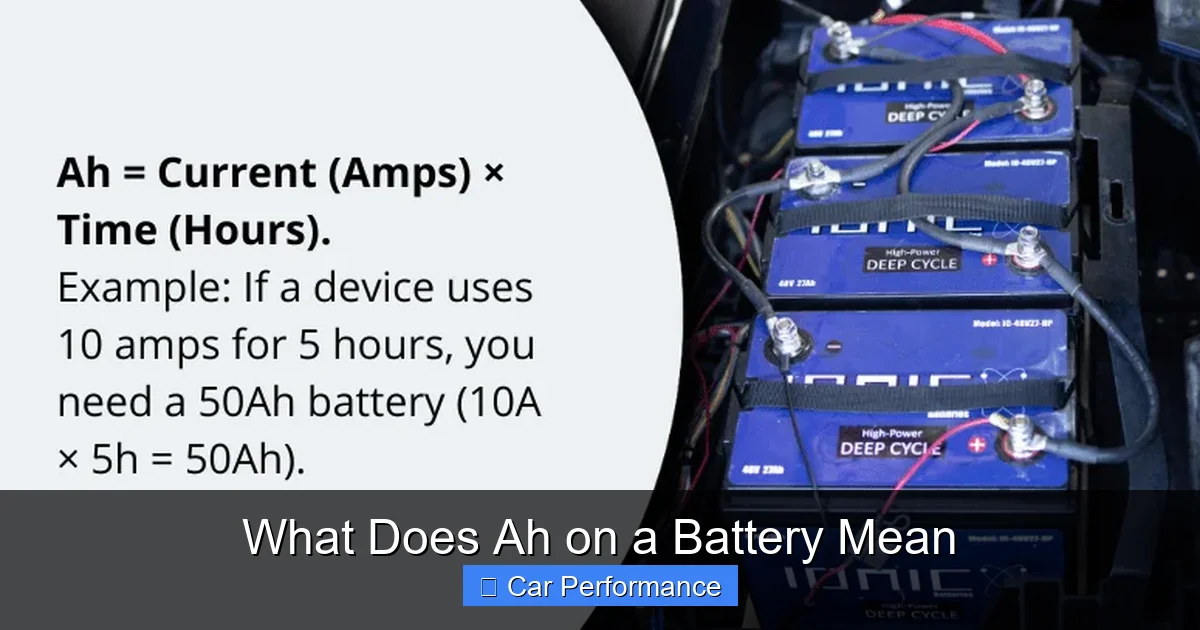
Visual guide about What Does Ah on a Battery Mean
Image source: lithiumhub.com
This measurement is crucial because your car does not just need a jolt of power to start; it needs a steady flow of energy to maintain onboard electronics. In modern vehicles, sensors, GPS units, and safety systems draw power constantly, even while the car is parked. This is often called “parasitic draw.” A battery with a proper Ah rating handles this background consumption without losing its ability to start the engine when you return.
The Difference Between Ah and CCA
People often get confused between Ah and CCA (Cold Cranking Amps). It is important to distinguish them. CCA is the burst of energy your battery gives to turn the starter motor. It is all about raw power for that split second. Ah, on the other hand, is about endurance.
While CCA gets your engine running, the Ah capacity determines how much stress the battery can take over time. Understanding what does Ah on a battery mean helps you balance these two needs. A high CCA is great for cold starts, but a healthy Ah rating keeps your electrical system stable during the entire journey.
Selecting the Right Battery for Your Lifestyle
Daily Commuters vs. Adventure Vehicles
Not every driver needs the same Ah rating. If you drive a standard sedan and your car is mostly stock, you should stick to the manufacturer’s recommended Ah rating. The engineers who built your car chose that number for a reason. It perfectly balances the charging output of your alternator with the electrical needs of your vehicle.
Going too high or too low can actually cause long-term damage to your charging system. However, if you drive an adventure vehicle, a van, or a car with extensive audio equipment, the answer to what does Ah on a battery mean becomes even more practical. You might need a “deep cycle” battery.
Deep cycle batteries are designed to have a higher Ah capacity because they are built to be drained and recharged frequently. If you use a standard starting battery for these tasks, it will fail prematurely because it is not designed to support long-term energy output.
Avoiding the Common Pitfalls
One of the biggest mistakes in 2026 is thinking that “bigger is always better.” Some owners buy the largest battery that fits in the tray, thinking that a higher Ah rating will make their car “better.” This is a misconception.
If your battery has a much higher Ah rating than your alternator was designed to handle, you might never get a full charge. The alternator will be constantly overworked, leading to premature alternator failure. Always check your owner’s manual to find the recommended Ah range for your specific make and model.
Maintaining Battery Health in 2026
Temperature and Its Impact
Battery capacity is heavily influenced by temperature. Heat is the ultimate enemy of battery life. In hot climates, the chemical reactions inside the battery happen too quickly, causing the internal components to break down.
When you learn what does Ah on a battery mean, you realize that high heat gradually reduces the effective Ah capacity over time. This is why batteries often fail in the summer, even though they were stressed during the winter.
Conversely, cold weather thickens the electrolyte fluid, making it harder for the battery to release its stored energy. A battery that has lost some of its Ah capacity due to age or heat will struggle significantly more in the winter.
Regular testing at your local auto shop can reveal if your battery is still meeting its rated Ah specs. If the capacity has dropped significantly, it is time for a replacement, regardless of how the car feels today.
Charging Habits
How you charge your battery matters. Using a smart charger that regulates voltage can help maintain the Ah capacity for longer. In 2026, many smart chargers have “desulfation” modes.
Sulfation is a process where lead sulfate crystals form on the battery plates, effectively shrinking the surface area and reducing the Ah capacity. By keeping your battery charged and using modern maintenance tools, you can preserve the original energy storage capacity for many years.
The Future of Power: Modern Battery Tech
Lithium-Ion vs. Traditional Lead-Acid
As we move through 2026, lithium-ion technology is becoming more common in automotive applications. When asking what does Ah on a battery mean in the context of lithium, the answer is slightly different.
Lithium batteries have a much higher energy density, meaning a smaller, lighter battery can provide the same or even higher Ah capacity than a traditional lead-acid battery. They also maintain their voltage better as they discharge.
If you are considering an upgrade to a lithium-based starting battery, remember to check for compatibility with your car’s charging system. While the Ah capacity might be great, your car’s computer needs to communicate with the battery correctly. This is the new frontier of vehicle performance, where battery management systems (BMS) play as much of a role as the battery itself.
Eco-Friendly Driving
For hybrid and electric-focused vehicles, battery capacity is measured in kilowatt-hours (kWh), but the principle remains the same as our Ah explanation. It is all about how much “fuel” you have stored to move the car or power its systems.
Understanding what does Ah on a battery mean is the foundational knowledge for every electric vehicle owner as well. It demystifies the dashboard range estimates and helps you understand why your car behaves differently when it is nearly depleted.
Conclusion: Powering Your Journey
By now, you should feel confident when someone asks, “What does Ah on a battery mean?” It is the heart of your vehicle’s electrical endurance. It dictates how long your lights stay bright, how effectively your computer systems run, and how much “reserve” you have for those extra gadgets.
By paying attention to these ratings and matching them to your car’s requirements, you are ensuring a safer, more reliable driving experience. Remember that your battery is not just a box of lead and acid; it is the silent engine behind all the comforts of your car.
Treat it well, choose the right capacity for your driving habits, and keep an eye on its health. With the right knowledge, you can avoid the frustration of a dead battery and enjoy the peace of mind that comes with knowing exactly what is powering your ride.
Frequently Asked Questions
What is the recommended Ah for my car?
The recommended Ah is specified by your vehicle manufacturer in the owner’s manual. It is best to stick to this exact number to ensure your alternator charges the battery efficiently without being overworked.
Can I use a higher Ah battery than recommended?
Generally, you can go slightly higher if the physical size fits the tray, but avoid excessive increases. A battery with a much higher Ah rating than required may not be fully charged by your alternator, leading to premature failure.
Does a higher Ah rating mean more power?
No, Ah relates to capacity or “runtime,” not the raw power or voltage. If you need more “starting” power, you should look at the Cold Cranking Amps (CCA) rating instead.
What happens if the Ah is too low?
If your battery has an Ah rating lower than what your car requires, it may struggle to run your electronics while the engine is off. It will also reach its discharge point much faster, shortening the battery’s overall lifespan.
How do I test my battery’s current Ah capacity?
A professional auto shop uses a load tester to determine the actual capacity remaining in your battery. This is the most accurate way to see if your battery is still performing to its factory specs.
Do I need higher Ah for a sound system?
Yes, if you have installed a powerful aftermarket sound system, you may need a battery with a higher Ah rating. This ensures the battery can support the extra power draw without losing the ability to start your engine.