
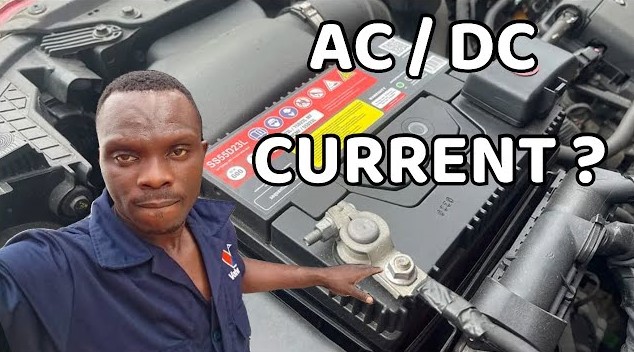
A car battery is strictly a Direct Current (DC) device. Because it stores chemical energy and releases it as a steady flow in one direction, it acts as the foundation for your vehicle’s 12-volt electronics. Understanding the difference between AC and DC is vital for maintaining your car’s performance in 2026.
Have you ever popped your hood and wondered exactly how that heavy box of lead and acid powers your entire car? It is one of the most common questions we get from drivers, especially as vehicles become more complex in 2026. When people ask, “is a car battery AC or DC,” they are actually tapping into the fundamental physics that keep modern transportation moving.
The short answer is that a car battery is always DC, or Direct Current. Unlike the wall outlets in your home, which push and pull energy back and forth, your car battery pushes energy in one consistent direction. This steady push is exactly what sensitive car computers need to function. Without this specific type of power, your engine would not start, and your lights would not glow.
Key Takeaways
- DC Fundamentals: A car battery provides Direct Current (DC) because electrons flow in one continuous direction, which is necessary for chemical storage.
- The Alternator Role: While the battery is DC, the alternator creates Alternating Current (AC) which is immediately converted to DC to charge the battery.
- Voltage Stability: DC power ensures your car’s sensitive electronic control units and sensors receive a constant, stable stream of energy.
- Inverters Explained: If you need to plug in household AC appliances in your car, you must use an inverter to change the battery’s DC into usable AC.
- Safety First: Never attempt to connect your car battery to an AC wall outlet, as the incompatible power types will cause severe damage or fire.
- Maintenance Matters: Keeping your DC battery connections clean ensures the smooth flow of current needed to start your engine reliably.
Understanding the Basics of DC Power
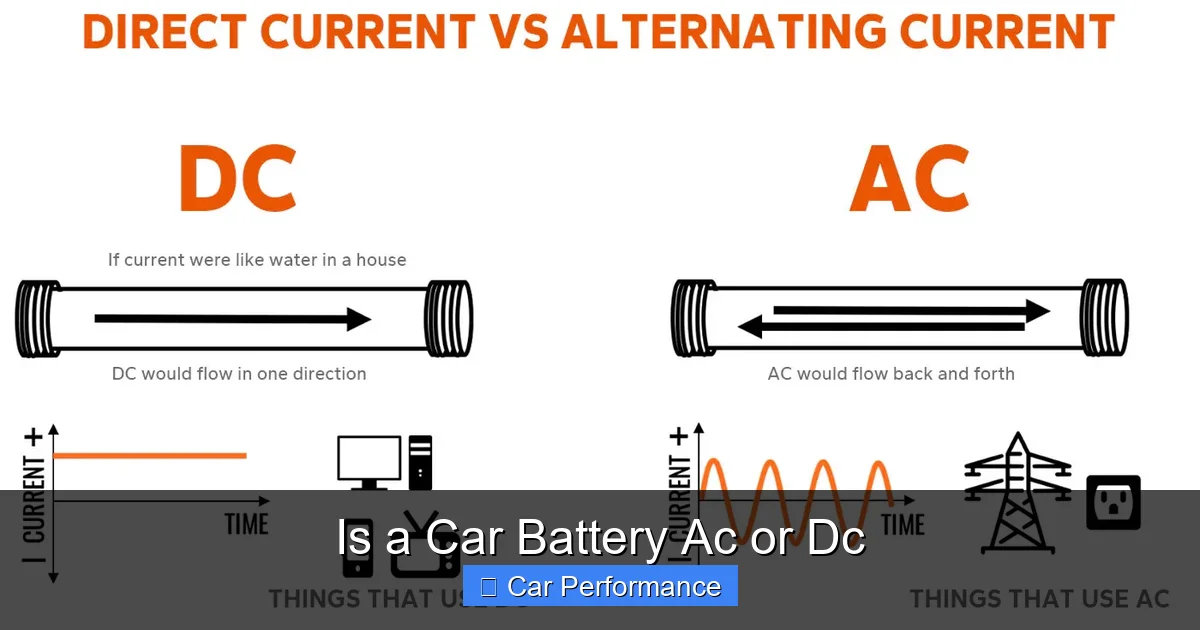
Direct Current, or DC, is all about consistency. Imagine a water hose where the water flows steadily from the spigot to the nozzle without ever changing direction. That is how DC works. Because a car battery relies on chemical reactions inside its lead-acid cells, it is naturally designed to output this one-way flow of electrons.
Why Cars Rely on Direct Current
Your vehicle is essentially a massive collection of electronics. From the radio to the fuel injectors, these systems require a specific, constant voltage. DC is perfect for this because it allows for stable energy storage.
If your car used AC, the “push-pull” nature of the current would make it nearly impossible to keep a charge inside the battery. The battery would spend all its time switching states, which would quickly ruin its internal chemistry.
The Chemical Connection
Inside your battery, there are lead plates submerged in sulfuric acid. When you turn the key, a chemical reaction occurs that pushes electrons from the negative terminal to the positive terminal. This is a one-way street. Because the battery is a chemical storage vessel, it cannot process the reversing polarity of AC power. It acts as a reservoir of energy that is ready to be used whenever you need it.
The Role of the Alternator
If the car battery is DC, where does the power go when you are driving down the highway? This is where the alternator enters the picture. The alternator is the unsung hero of your electrical system. It is responsible for keeping your battery charged while the engine is running so you do not get stranded.
Visual guide about Is a Car Battery Ac or Dc
Image source: cdn.shopify.com
AC vs. DC in the Alternator
Interestingly, the alternator actually generates Alternating Current (AC) because it uses rotating magnets. However, because your car battery is DC, the car cannot use that raw AC power. Inside the alternator, there is a component called a rectifier. This device acts like a gatekeeper, forcing the AC to turn into DC before it enters the car’s electrical circuit.
Keeping the Battery Topped Up
As you drive in 2026, your car’s electrical demands fluctuate. The alternator works constantly to provide that steady DC flow, not just to power your headlights and AC unit, but also to refill the “tank” of your battery. If you ever notice your dashboard lights flickering, it is often a sign that the rectifier inside your alternator is struggling to convert that AC energy effectively, leading to inconsistent DC delivery.
Inverters: Bridging the Gap
Since we have established that a car battery is DC, you might wonder what happens when you want to use a laptop, a coffee maker, or a gaming console inside your vehicle. Most household appliances are built for the AC power that comes from your wall outlet at home. This is where an inverter becomes a must-have tool for modern travelers.
How Inverters Change DC to AC
An inverter is a smart device that takes the 12-volt DC from your car battery and manipulates it to mimic the 120-volt AC from your home. It uses complex electronics to chop the DC signal and flip its direction rapidly. It is like taking that steady hose of water and using a mechanical valve to force it to pulse back and forth. It requires significant effort, which is why inverters are only recommended for use when the engine is running.
Practical Tips for Using Inverters
If you use an inverter in your car, always be mindful of your battery’s capacity. Because the inverter is drawing power to convert it into AC, it can drain your battery surprisingly fast if the engine is off. Always ensure your engine is running so the alternator can supply the DC needed to keep the process going. This prevents the “dead battery” surprise when you are out on a road trip.
Maintenance for Your DC Electrical System
Even though your car battery is robust, it still needs care to maintain that perfect DC flow. In 2026, many of us rely on our cars for more than just transportation; we use them as mobile offices and entertainment hubs. Keeping your electrical connections clean is the simplest way to ensure your battery performs well.
Watch for Corrosion
Corrosion on the battery terminals acts like a wall, blocking the flow of DC electricity. Even a small amount of white, crusty buildup can cause resistance, which drops the voltage your car receives. A simple mixture of baking soda and water can clean these terminals, allowing the current to flow freely again. If your car feels sluggish when starting, check the terminals first.
The Importance of Voltage Levels
Since DC power relies on steady voltage, a weak battery can cause all sorts of glitches. Modern cars are filled with computers. If the DC voltage drops even slightly, these computers can throw “ghost codes” or error messages. Regularly testing your battery with a multimeter is a great way to stay ahead of these issues. A healthy car battery should show roughly 12.6 volts when the engine is off.
Future Trends in 2026 Car Electronics
As we navigate through 2026, the lines between traditional combustion cars and electric vehicles (EVs) are beginning to blur in terms of electrical needs. While a gas car uses a 12-volt DC battery for starting and accessories, many EVs use massive high-voltage DC battery packs to drive the wheels directly.
The Evolution of Battery Tech
Regardless of whether you drive a hybrid, an EV, or a traditional gas vehicle, the reliance on DC is not going anywhere. Engineers are currently working on solid-state batteries that can hold more DC energy in a smaller space. This means future car batteries will be lighter, more efficient, and capable of lasting significantly longer than the batteries we use today.
Why Stability Remains King
The core principle remains the same: steady, reliable DC power is the heart of the machine. Whether it is a small motorcycle or a large electric truck, the need for a controlled flow of electrons will always be the standard. We are moving toward faster charging times, but the underlying science of utilizing DC for storage continues to be the most efficient path forward for automotive technology.
Conclusion
So, to bring it all back to the original question: is a car battery AC or DC? It is fundamentally, and exclusively, a DC device. It thrives on providing a steady, one-way stream of power that keeps your vehicle’s computers, ignition, and lights operating in perfect harmony.
While your car might interact with AC through the alternator’s generation process or through a power inverter for your gadgets, the battery itself remains the guardian of your DC system. By understanding this, you become a more informed car owner.
You now know why those connections need to be clean, why inverters require caution, and how your alternator keeps the system running. Treat your battery well, keep the connections clean, and your car will continue to serve you reliably for miles to come.
Frequently Asked Questions
Can I charge my car battery with an AC charger?
Yes, you can use a car battery charger, but that charger contains a transformer and rectifier that converts the AC from your wall outlet into the DC required by your battery. You should never connect a raw AC power source directly to a battery, as it will be dangerous.
What happens if I connect an AC appliance directly to my car battery?
Connecting an AC appliance directly to the battery will not work because the appliance requires the specific frequency and alternating polarity of house power. Additionally, you could cause a short circuit or damage the internal components of the device you are trying to power.
Does an electric car battery work the same way?
Yes, electric vehicle batteries also store power as DC. The main difference is the significantly higher voltage and capacity compared to a standard 12-volt starter battery found in a traditional gas vehicle.
Why does my radio need a DC power source?
Sensitive electronic components, including radio tuners and digital displays, require a constant voltage to maintain their settings and prevent internal damage. DC provides this consistent environment, whereas AC would constantly fluctuate, making it unsuitable for microchips.
Is it possible to convert AC back to DC efficiently?
Yes, modern rectifiers and converters are highly efficient at changing AC to DC. This technology is precisely what allows your car’s alternator to keep the battery charged while the engine is running.
How do I know if my battery is failing to output proper DC?
Common signs include dimming headlights, slow engine cranking, or the “check engine” light appearing on your dashboard. If you suspect an issue, using a digital multimeter to measure the DC voltage across the battery terminals is the fastest way to confirm its health.