
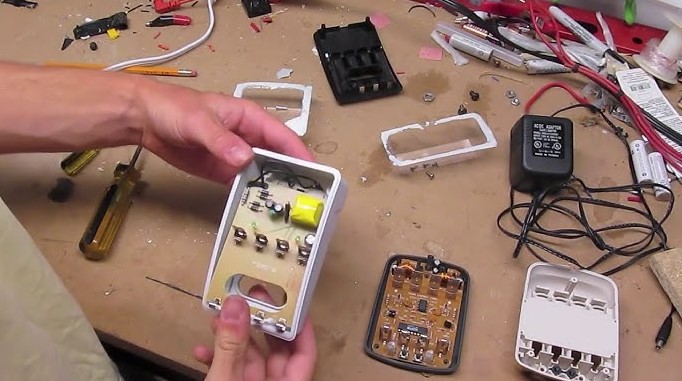
Understanding what is inside a battery charger reveals the sophisticated engineering protecting your vehicle’s health. From smart microprocessors to power conversion components, these devices ensure your battery stays healthy and efficient for years to come.
Have you ever popped open the casing of a high-end battery charger? It looks like a miniature city of wires, chips, and metal fins. Most of us just plug the unit into the wall and connect the clips to our terminals, never thinking twice about the wizardry happening inside.
As we look at vehicle maintenance in 2026, understanding what is inside a battery charger has become essential for anyone who cares about car performance and longevity. A battery charger is far more than a simple power adapter.
It is a highly intelligent management system designed to breathe life back into your lead-acid or lithium-ion vehicle power bank. Whether you are dealing with a classic car that sits in the garage or a modern daily driver, knowing how these internal components interact can help you diagnose issues and choose the right tools for your garage.
Key Takeaways
- Smart Microprocessors: Modern units use AI-driven controllers to monitor voltage and adjust charging stages automatically.
- Power Conversion: Chargers rely on transformers and rectifiers to turn high-voltage wall AC power into safe, usable DC current.
- Safety Mechanisms: Internal sensors detect short circuits, overheating, and reverse polarity to protect both you and your car.
- Pulse Charging Tech: Sophisticated chargers use pulse signals to desulfate plates, extending the overall lifespan of your automotive battery.
- Cooling Systems: Passive and active heat sinks are essential components that prevent internal damage during rapid charge cycles.
- Connectivity: By 2026, most chargers integrate Bluetooth or Wi-Fi modules for real-time monitoring via mobile applications.
The Anatomy of Power Conversion
The primary job of any charger is to take the electricity flowing from your house – which is alternating current (AC) and turn it into the direct current (DC) your battery requires. This process is not as simple as it sounds. If you were to just feed house current into a battery, you would likely cause an explosion or fire. That is why the internal structure is built for precision conversion.
Transformers and Rectifiers
Deep inside the chassis, you will find a hefty transformer. Its job is to step down the high voltage of your home outlet to a safer level that matches your car’s battery requirements, typically 12V or 24V. Once the voltage is dropped, the current passes through a bridge rectifier. Think of this as a one-way street for electricity. The rectifier ensures that the power flows in only one direction, which is vital for charging chemistry.
Capacitors and Smoothing Filters
If you look at the board, you will see large, cylinder-shaped components called capacitors. These act as temporary storage reservoirs. They smooth out the electrical “ripples” created by the rectification process. By creating a steady, flat stream of power, these components ensure that your battery receives clean energy. In 2026, these parts are more efficient than ever, allowing for smaller, lighter chargers that deliver more power than the bulky units of the past.
The Brain: Intelligent Microprocessors
If the transformers are the heart of the charger, the microprocessor is the brain. In older models, charging was a “dumb” process. It just pushed power until you pulled the plug. Today, everything is computer-controlled. When you ask what is inside a battery charger, the answer is increasingly dominated by silicon and code.
Adaptive Charging Stages
Modern microprocessors run sophisticated algorithms that monitor your battery’s state of charge in real-time. They break the process into stages: bulk, absorption, and maintenance. During the bulk stage, the chip allows for maximum current flow to get the battery to 80% quickly.
Then, it slows down during the absorption stage to top off the cells without overheating them. Finally, it switches to a maintenance float charge, ensuring your battery stays at 100% without overcharging.
Battery Health Diagnostics
Because these chips are so fast, they can perform a health check every few milliseconds. They measure the internal resistance of your battery to see if it is holding a charge correctly. If the microprocessor detects a faulty cell or a short, it will cut the power instantly. This “smart” capability is the biggest reason why modern car batteries last significantly longer than those manufactured in previous decades.
Safety and Protection Circuits
Working with electricity and heavy batteries carries inherent risks. This is why manufacturers dedicate a large portion of the internal space to safety protocols. A well-designed charger is built to forgive human errors, like connecting the wrong clips to the wrong terminals.
Reverse Polarity Protection
We have all accidentally crossed our wires at least once. If you attach the positive clip to the negative post, you could cause a massive spark or damage your car’s sensitive onboard computers. Inside the charger, a dedicated circuit sits between the battery clips and the main power supply. It detects the incorrect connection instantly and forces a total shutdown, preventing any current from leaving the unit until you fix the mistake.
Thermal Management
Charging generates heat, especially when pushing high amps into a depleted cell. You will notice large aluminum structures inside the case, known as heat sinks. These pull heat away from the sensitive electronics and dissipate it into the air.
Many modern 2026 models even include whisper-quiet fans that only kick in when the internal sensors detect that the components are getting too warm. This passive and active cooling combination is vital for the safety of your charger.
Pulse Charging and Desulfation Technology
One of the most interesting parts of modern chargers is the hardware dedicated to maintenance. Over time, lead-acid batteries develop “sulfation”—a buildup of lead sulfate crystals on the internal plates. This buildup kills the battery’s ability to hold a charge. Some advanced chargers contain internal oscillators designed to combat this.
How Pulse Signals Work
These units don’t just provide a steady flow of current; they send high-frequency pulses into the battery. These pulses act like a sonic cleaner for the chemical plates inside your battery, vibrating the sulfate crystals until they dissolve back into the electrolyte solution. By incorporating this feature, the internal circuitry effectively reverses the aging process of the battery, giving you more years of service and saving you money on replacements.
Connectivity and Modern User Interfaces
As we move further into 2026, the humble charger has gone digital. If you were to tear down a high-end unit today, you would likely find a small communications module nestled near the main board. This component allows the charger to talk to your smartphone, tablet, or vehicle dashboard.
Wireless Integration
Bluetooth and Wi-Fi modules are becoming standard. They allow you to see the exact state of charge, the temperature of the battery, and any error codes directly on your phone screen. This takes the guesswork out of maintenance. You no longer have to squint at a tiny analog needle; the charger sends the data to you, allowing you to manage your car’s health from your living room.
Firmware Updates
Yes, your charger now has software that can be updated! Because battery chemistry continues to evolve, manufacturers use these internal modules to update the charging profiles. If you buy a new type of high-performance lithium battery, you might be able to update your charger’s firmware to accommodate the new charging parameters, ensuring your hardware remains relevant for years.
Choosing the Right Charger for Your Needs
Now that you know what is inside a battery charger, you can see why not all units are created equal. When shopping in 2026, look for units that prioritize smart microprocessors and robust safety protections. Avoid the super-cheap, “dumb” chargers that lack proper diagnostic features; they can actually damage your expensive modern car electronics. Invest in a unit that uses multi-stage charging and pulse technology to protect your investment.
Remember that maintenance is key to car performance. A battery that is always at 100% performs better, helps your alternator run more efficiently, and ensures your car starts every single time, regardless of how cold it is outside. By taking care of your battery with a smart charger, you are essentially taking care of your entire vehicle’s electrical system.
In conclusion, the battery charger is a masterpiece of modern engineering. From the humble transformer that handles the raw power to the advanced microprocessor that manages chemical health, every component serves a vital role. By understanding these parts, you can make informed decisions about your vehicle maintenance and ensure that your car stays on the road where it belongs. Keep your battery happy, and your car will thank you with years of reliable performance.
Frequently Asked Questions
Is it safe to leave a smart battery charger connected indefinitely?
Yes, modern smart chargers are designed to enter a “maintenance” or “float” mode once the battery is full. This keeps the battery topped off without the risk of overcharging or damaging the cells.
What does a bridge rectifier do inside the charger?
The bridge rectifier converts the alternating current (AC) from your wall outlet into the direct current (DC) that a vehicle battery needs to store energy. Without this component, the battery would not be able to receive a charge.
Why do some chargers have fans inside them?
Chargers generate heat during the conversion process, especially during the bulk charging phase. Fans are part of the thermal management system that prevents internal components from overheating and failing prematurely.
What is the purpose of the heat sink?
Heat sinks are aluminum or metal structures designed to draw heat away from power transistors and other critical components. By dissipating this heat, the charger can run safely and efficiently for long periods.
Can a charger repair a completely dead battery?
If the battery has a physical short or a broken plate, a charger cannot repair it. However, if the battery is simply deeply discharged or suffering from minor sulfation, a smart charger with desulfation pulses may be able to revive it.
Does a cheaper charger work as well as an expensive one?
Cheaper chargers often lack microprocessors and safety circuits, which can lead to overcharging or damage to your vehicle’s sensitive electronics. Investing in a high-quality unit ensures better battery health and safer charging cycles.