
Knowing when to change car battery is vital for avoiding unexpected breakdowns in 2026. By recognizing early warning signs like slow engine cranks and dim lights, you can replace your battery proactively before it leaves you stranded.
Picture this: it is a Tuesday morning in 2026. You are running late for a big meeting, you grab your coffee, hop into your car, and turn the key. Instead of the familiar roar of your engine, you hear a rhythmic, agonizing click-click-click. Your dashboard lights flicker weakly and then die. It is the sinking feeling every driver dreads. You are stranded, and it all comes down to one simple question: when to change car battery?
Many drivers treat their car battery as an “out of sight, out of mind” component. We assume it will always work until the very second it does not. However, being proactive about your battery health can save you from high stress, expensive tow trucks, and lost time. In this guide, we will walk through the signs, the science, and the smart maintenance tips to ensure your car stays powered up all year long.
Key Takeaways
- Lifespan Expectancy: Most modern automotive batteries last between three and five years, depending on climate and usage.
- Warning Signs: Listen for slow engine starts, watch for dim dashboard lights, and keep an eye out for physical corrosion on terminals.
- Climate Impact: Extreme heat is actually more damaging to batteries than cold, often shortening their lifespan significantly.
- Battery Testing: Visit an auto parts store for a free load test if you suspect your battery is nearing the end of its life.
- Maintenance Matters: Regularly cleaning terminals and ensuring the battery is securely mounted can prevent unnecessary power loss.
- Professional Inspection: Always have your charging system checked to ensure the alternator isn’t the real cause of your power issues.
Understanding the Lifespan of Your Battery
The first thing to understand is that your battery is not a permanent fixture. It is a chemical storage device that degrades every time it goes through a charge-and-discharge cycle. On average, you should be asking when to change car battery once you hit the three-year mark. While some batteries might stretch to five years or more, four years is often considered the “sweet spot” for a replacement.
The Role of Climate and Driving Habits
You might think that freezing winter weather is the biggest battery killer. Surprisingly, heat is often more destructive. Intense summer heat can cause the fluid inside your battery to evaporate, damaging the internal structures. If you live in a region with scorching summers, you might find yourself needing a replacement sooner than someone in a temperate zone. Furthermore, short, frequent trips prevent the alternator from fully recharging the battery, which leads to sulfation—a buildup of crystals that reduces capacity.
Signs Your Battery is Aging
Aging is not always obvious. Sometimes, the battery will show its age through sluggish performance. If your engine takes a little longer to start than it did when the car was new, it is likely the battery is struggling to provide the necessary cold cranking amps. Pay attention to how your car sounds in the morning. That slow, hesitant crank is the classic “first cry” of a dying battery.
Physical Indicators of Battery Failure
You do not need to be a certified mechanic to inspect your battery. A quick visual check under the hood can reveal a lot about when to change car battery. When you pop the hood, look for obvious signs of physical distress. Batteries are heavy-duty components, but they are still susceptible to the elements and internal chemical issues.
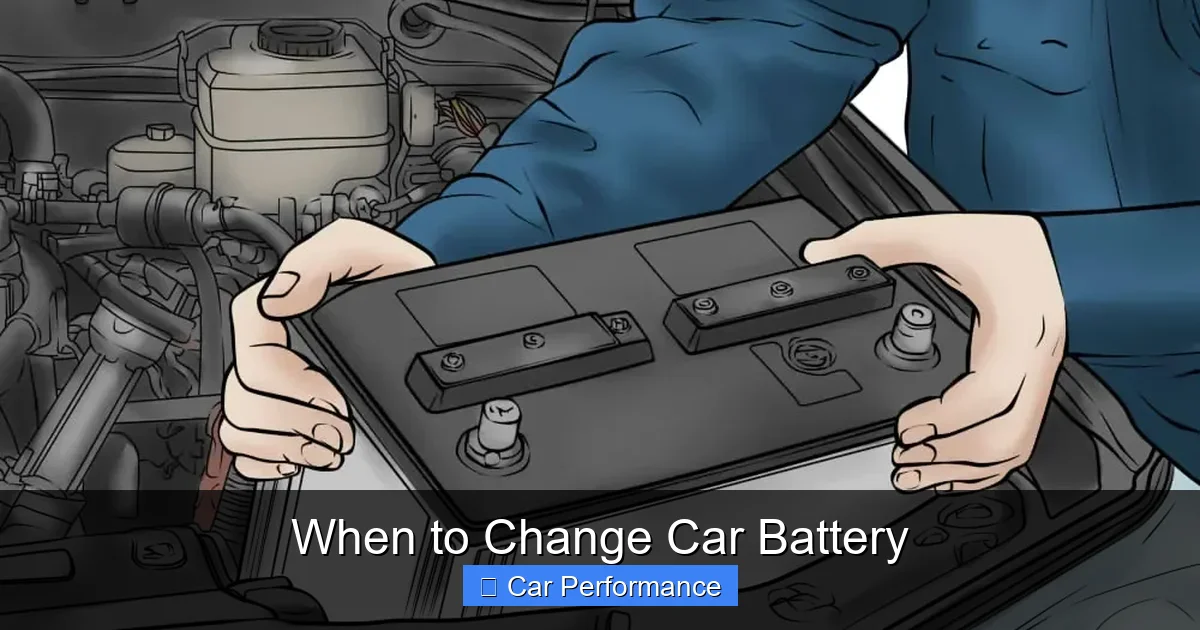
Visual guide about When to Change Car Battery
Image source: res.cloudinary.com
Corrosion and Swelling
Check the terminals the metal posts where the cables attach. If you see a white, blue, or green powdery substance, that is corrosion. While you can clean it off with a mixture of baking soda and water, constant or heavy corrosion can indicate that the battery is venting acid or gas, which is a sign of internal failure.
Additionally, look at the plastic casing. Does it look swollen or bloated? This happens when a battery is exposed to extreme heat or overcharging. If the battery looks “fat,” it is time for an immediate replacement, regardless of how well it is currently performing.
The Rotten Egg Smell
If you ever notice a sharp, sulfur-like “rotten egg” smell while driving, stop and inspect your battery immediately. This odor usually indicates that the battery is leaking gas or is severely overcharged by the alternator. This is not just a performance issue; it is a safety concern. Never drive a vehicle if you smell sulfuric acid near the battery area.
Electrical Symptoms to Monitor
Your car’s electrical system is a massive network that relies on the battery as its heartbeat. When that heart starts to fail, the entire system begins to stutter. Knowing when to change car battery involves paying attention to the smaller, electrical quirks that often get ignored during daily commutes.
Dimming Lights and Electronics
Have you noticed that your headlights seem dimmer when the car is idling? Or perhaps your interior cabin lights flicker when you use the window switches? These components rely on a steady flow of voltage. When your battery is weak, it cannot maintain this steady flow during high-demand moments. If your power windows are moving up or down slower than usual, it is a tell-tale sign that your electrical system is starved for power.
Dashboard Warning Lights
Most modern vehicles are equipped with sophisticated battery monitoring systems. If a battery icon pops up on your dashboard, do not ignore it. This light usually indicates a problem with the charging system, which often means the battery is no longer holding a charge. In some cars, you might also see “Check Engine” or “ABS” lights appearing because the computers are getting low or erratic voltage, triggering false error codes.
How to Test Your Battery Health?
Guesswork is not a good strategy when it comes to vehicle reliability. The best way to know when to change car battery is to perform a test. You do not need to head straight to a dealership or an expensive repair shop to get an accurate reading.
The Free Load Test
Most local auto parts stores offer a free battery testing service. They use a handheld device that places a “load” on the battery to see how it performs under pressure. This test simulates the energy draw required to start an engine. It is fast, easy, and gives you a definitive answer on whether your battery has “good” health, needs a recharge, or has reached the end of its cycle.
Using a Multimeter at Home
If you are comfortable with basic tools, you can use a digital multimeter to check your battery voltage. With the car turned off, a fully charged battery should read approximately 12.6 volts. Anything below 12.2 volts indicates the battery is significantly undercharged. If you check it and it reads 12.4 volts but drops rapidly when you try to start the car, that suggests the battery lacks the capacity to hold energy, meaning it is time for a trip to the store.
Maintenance Tips to Extend Battery Life
If you have just bought a new battery or your current one is still testing well, you can take steps to ensure it lasts as long as possible. Extending the life of your battery is about reducing the strain placed on it during every drive.
Drive Regularly
The worst thing you can do for a car battery is to let the vehicle sit idle for weeks at a time. The battery will naturally lose its charge, and if it stays in a low-charge state for too long, it can develop permanent damage. Try to drive your car for at least 20 to 30 minutes once a week to allow the alternator to fully replenish the battery.
Keep it Clean and Tight
Dirt and moisture on the top of the battery can create a conductive path that slowly drains the battery over time. Keep the top of the casing clean and dry. Also, ensure the hold-down bracket is tight. Constant vibration is a major enemy of internal battery components. If your battery is rattling around while you drive over speed bumps, you are essentially shortening its lifespan with every mile.
Conclusion: Choosing the Right Replacement
When the time finally comes to replace your battery, do not just grab the cheapest one on the shelf. In 2026, vehicle electrical systems are more complex than ever. Always check your owner’s manual to ensure you are buying the correct Group Size and Cold Cranking Amps (CCA) rating for your specific vehicle. A high-quality battery is one of the best investments you can make in your car’s reliability.
Remember, the goal is to replace the battery before it forces you to. By watching for the signs, performing regular checks, and respecting the power needs of your vehicle, you can keep your car on the road and your morning commute stress-free. Stay ahead of the curve, and you will never have to worry about that dreaded “click-click-click” again.
Frequently Asked Questions
How long should a car battery typically last?
Most automotive batteries last between three and five years. Factors like your local climate, how often you drive, and how well you maintain the connections play a big role in that lifespan.
Can a bad alternator look like a bad battery?
Yes, they share similar symptoms, such as the car failing to start or dimming lights. It is important to have a professional test both components to determine which one is truly at fault.
Is it okay to jump-start my car every day?
No, jump-starting is meant for emergency situations only. If you find yourself needing a jump-start frequently, your battery is likely failing and needs to be replaced immediately.
Does cold weather really kill car batteries?
While cold temperatures reduce the chemical reaction speed inside the battery, extreme heat causes more long-term damage. Cold weather simply exposes a battery that was already failing due to previous heat-related wear.
Can I replace a car battery myself?
Yes, it is a straightforward process for most vehicles, but you must wear safety glasses and gloves because of the acidic content. Always disconnect the negative terminal first to avoid short-circuiting the system.
What does the “CCA” rating mean on a battery?
CCA stands for Cold Cranking Amps, which measures the battery’s ability to start an engine in cold temperatures. Always match or exceed the CCA requirement specified by your vehicle’s manufacturer.