
Battery acid is a highly corrosive solution of sulfuric acid and water that powers lead-acid batteries. Understanding what is battery acid is vital for every car owner, as it enables the chemical reaction needed to start your engine and keep your electronics running smoothly.
Have you ever popped your car hood, looked at that heavy, rectangular box, and wondered exactly what makes it tick? We often take for granted that our car will start every single time we turn the key. Yet, deep inside that plastic casing lies a fascinating, albeit dangerous, chemical powerhouse. If you have ever asked, “what is battery acid,” you are touching on the very heart of automotive engineering.
For decades, the lead-acid battery has been the workhorse of the automotive industry. Even as we enter 2026, with hybrid and electric vehicles becoming more common, the classic lead-acid design remains the primary way we start our engines and power our dash cams, lights, and radios. Knowing how this liquid works can help you maintain your car better and stay safe while working in your garage.
Key Takeaways
- Chemical Composition: Battery acid is primarily a mixture of sulfuric acid and distilled water, creating a potent electrolyte.
- The Power Source: It facilitates the movement of ions between battery plates, which stores and releases electrical energy.
- Safety First: Because it is highly corrosive, you must always wear protective gear like gloves and goggles when inspecting your battery.
- Maintenance Matters: Keeping your battery terminals clean prevents acid corrosion from destroying your car’s electrical connections.
- Modern Context: Even as we move toward 2026 and electric vehicle tech, lead-acid batteries remain the standard for traditional internal combustion engines.
- Emergency Handling: If you come into contact with battery acid, immediate flushing with water is the most critical first-aid step.
The Science Behind the Solution
What Exactly Is the Mix?
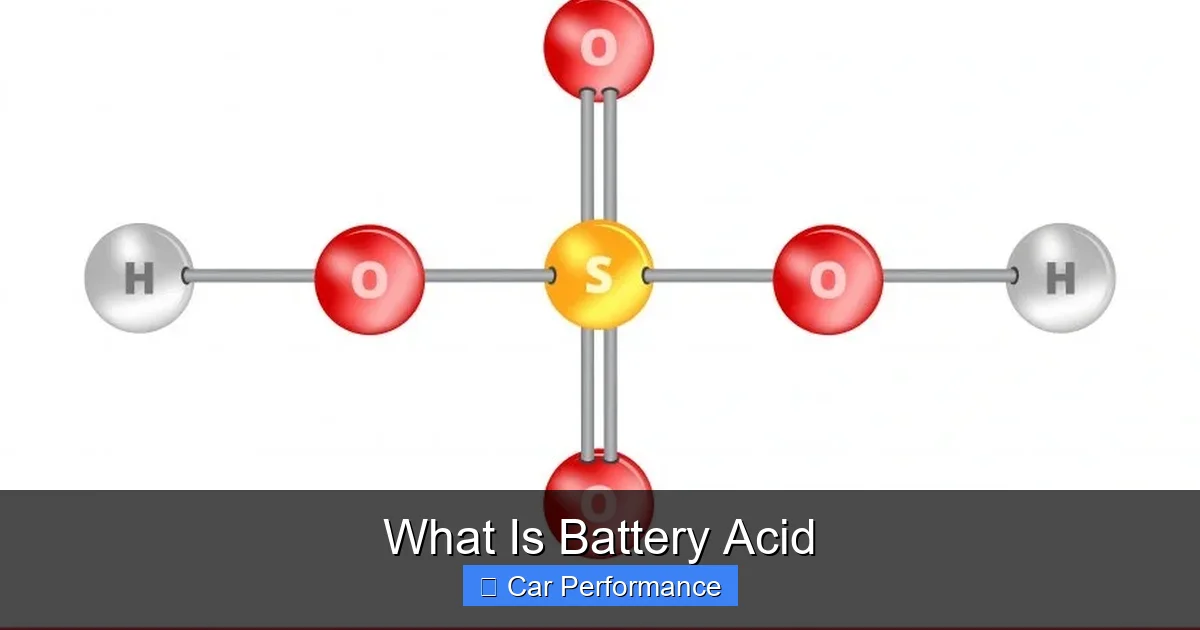
When people ask what is battery acid, they are usually referring to a specific liquid known as an electrolyte. This liquid is essentially a mixture of about 35 percent sulfuric acid and 65 percent distilled water. This specific ratio is carefully engineered to ensure that the chemical reaction inside the battery is efficient and stable.
Sulfuric acid is incredibly strong. It is not just “water with some acid in it.” It is a chemical that can cause serious burns to skin and damage to clothing or garage floors. The distilled water acts as a carrier, allowing the ions to move freely between the lead plates inside the battery. Without this balance, your car would simply be a heavy metal frame sitting in your driveway.
How the Chemical Reaction Works
The magic happens through a process called electrochemistry. When you turn your ignition, the lead plates inside the battery react with the sulfuric acid. This interaction releases electrons, which flow out of the battery and into your car’s starter motor. This flow of electrons is exactly what we call electricity.
As the battery discharges, the chemical makeup of the liquid changes. The sulfate from the acid binds to the lead plates, leaving the liquid behind as mostly water. When your engine is running, your car’s alternator sends electricity back into the battery, reversing this process and forcing the sulfate back into the liquid. It is a brilliant, self-sustaining loop that works over and over again.
Why Is Battery Acid Dangerous?
Understanding Corrosive Properties
Knowing what is battery acid means respecting its power. Because sulfuric acid is highly corrosive, it eats away at organic materials and metals alike. If you have ever seen a car battery with a crusty, blue or white powder on the terminals, you are seeing the result of battery acid leaks reacting with the metal connectors.
Visual guide about What Is Battery Acid
Image source: chemicals.co.uk
This “corrosion” can eat through copper wires and weaken the steel frame of your car. If the acid leaks out of a cracked casing, it can quickly turn a simple maintenance job into an expensive repair. This is why keeping your battery clean and inspecting it for cracks is a must for any vehicle owner in 2026.
Health and Safety Precautions
Always wear safety glasses when working near your car battery. A small splash of this fluid into your eye can cause permanent damage. If you are handling a battery that looks bloated or swollen, keep your distance. That swelling is often a sign of internal gas buildup, which can lead to the battery casing cracking and leaking acid.
If you do happen to get some on your skin, do not panic. The best thing to do is rinse the area under cool, running water for at least fifteen minutes. Do not try to neutralize it with base chemicals like baking soda unless a medical professional tells you to, as the heat generated by the chemical reaction can cause additional burns.
Maintaining Your Battery in 2026
Checking for Leaks and Corrosion
Most modern batteries are “sealed,” which means they are designed to be maintenance-free. You do not need to add water to them anymore. However, even sealed batteries can develop problems. Periodically check the top of the battery for any signs of wetness or white, powdery residue around the post connectors.
If you see that residue, you can clean it with a simple mix of baking soda and water. Use an old toothbrush to scrub the terminals gently. This neutralizes any small amounts of acid that have escaped, protecting your car’s wiring from further damage. It is a quick job that can add years to the life of your electrical system.
Recognizing the Signs of a Dying Battery
Your battery gives you plenty of warning signs before it quits. If your car is sluggish to start on a cold morning, that is a classic symptom. Also, if your interior lights seem dim when the engine is off, or if you hear a clicking sound when you turn the key, your electrolyte levels or plate integrity might be failing.
By 2026, many vehicles have built-in battery monitors that display voltage on your dashboard. If you see the voltage dropping below 12.4 volts when the car is off, it is time to have your battery tested at a local auto shop. They can use a load tester to see if your battery is still holding a charge effectively.
Storage and Disposal: Do It Right
Storing Batteries Safely
If you have a spare battery for a classic car or a lawnmower, storage matters. Always store batteries in a cool, dry place. Extreme heat is the enemy of battery acid. High temperatures cause the chemical reactions inside to speed up, which can lead to permanent plate degradation and shortened battery life.
Never place a battery directly on a concrete floor for long periods. Contrary to old myths, it won’t drain the battery, but the temperature changes in the concrete can affect the casing. Place it on a piece of wood or plastic instead. Keeping it off the ground makes it easier to inspect and keeps it away from potential spills.
Responsible Recycling
What is battery acid’s final destination? It should be a recycling center. Lead-acid batteries are among the most recycled consumer products on earth. They contain lead and plastic that are incredibly valuable. When you buy a new battery, always trade in your old one.
Retailers will often give you a “core charge” refund when you bring back the old battery. This ensures the acid is handled by professionals who know how to neutralize it, and the heavy metals are kept out of our environment. It is the responsible way to finish the cycle of your battery’s life.
The Future of Power and Performance
The Evolution of Automotive Energy
As we navigate through 2026, the question “what is battery acid” is becoming part of a wider conversation. While the electric vehicle boom relies heavily on lithium-ion technology, the good old-fashioned lead-acid battery is not going anywhere. It is still the gold standard for starting power because it can discharge a high amount of energy in a very short burst—exactly what a starter motor needs.
Lithium batteries are great for storing energy for long trips, but lead-acid batteries are still the kings of the “crank.” As performance vehicles continue to add more tech, the role of these batteries will remain steady. We are seeing improvements in casing materials and plate alloys, making them more durable and leak-resistant than ever before.
Tips for Better Performance
To get the most out of your car’s electrical system, try to limit how often you use electronics while the engine is off. Listening to the radio for an hour at the drive-in or charging your phone with the car parked puts a drain on the battery that the alternator cannot replace until you drive. Short, frequent trips can also be hard on a battery, as the alternator needs time to fully recharge it after the energy used to start the engine.
If you do not drive your car often, consider investing in a “trickle charger.” This device plugs into a wall outlet and keeps your battery at a perfect, healthy charge level. It prevents the battery from sitting in a discharged state, which is when the lead plates are most likely to suffer damage from the sulfuric acid.
Conclusion
Understanding what is battery acid is more than just a science lesson; it is a fundamental part of being a knowledgeable car owner. This potent mixture of sulfuric acid and water is the spark that brings your vehicle to life. While it requires respect and careful handling, it is a reliable, proven technology that has kept us moving for over a century.
By keeping an eye on your battery, cleaning those terminals, and recycling responsibly, you are protecting your car’s performance and the environment. As we move further into the technological advancements of 2026, remember that sometimes the most effective solutions are the ones that have stood the test of time. Take care of your battery, and it will take care of you, ensuring that every drive starts exactly the way it should.
Frequently Asked Questions
Is it safe to touch battery acid with your bare hands?
No, you should never touch battery acid with your bare hands. It is a highly corrosive substance that will cause chemical burns upon contact with skin.
What should I do if I get battery acid on my clothes?
Immediately remove the affected clothing to prevent the acid from reaching your skin. Flush your skin with plenty of water and wash the clothing separately with soap, though the acid may have already permanently damaged the fabric.
Why does battery acid turn into white powder on the terminals?
The white powder is usually lead sulfate. It forms when battery gases react with the metal terminals and oxygen, especially in humid conditions or if there is a tiny leak at the battery post.
Can I add tap water to my battery if the level is low?
You should only ever add distilled water to a battery. Tap water contains minerals and impurities that will damage the internal battery plates and shorten the life of the battery significantly.
How do I know if my battery is leaking?
Look for wet patches, liquid drips, or a strong, sulfur-like “rotten egg” smell coming from the battery area. If you see any of these signs, avoid touching the battery and have it inspected by a professional.
Are all car batteries filled with acid?
Most traditional lead-acid car batteries use this liquid electrolyte. However, some newer AGM (Absorbent Glass Mat) batteries hold the acid in a fiberglass mat, and lithium-ion batteries use entirely different chemical compositions.