
If your car won’t start, a dead battery is often the culprit. By watching for dimming headlights, slow engine cranks, and warning lights, you can diagnose the problem quickly. Use our guide to spot these red flags and get back on the road in 2026.
There is nothing quite as frustrating as jumping into your car, turning the key or pushing the start button, and hearing absolutely nothing. Or worse, hearing that dreaded, sluggish groan that lets you know your vehicle just doesn’t have the juice to wake up. In 2026, modern cars rely more than ever on electrical systems, making a healthy battery the heartbeat of your daily commute.
Knowing how to know if your car battery is dead before you get stranded is a vital skill for every driver. You do not need to be a professional mechanic to identify these issues. By paying attention to how your car behaves on a daily basis, you can often spot the early warning signs of a failing battery and address them before you find yourself stuck in a parking lot or your own driveway.
Key Takeaways
- Listen for the Click: A rapid clicking sound when you turn the key is a classic indicator that your battery lacks the power to engage the starter.
- Check the Lights: Dim dashboard lights or headlights that lose brightness when the engine is off are major warning signs.
- The Age Factor: Most car batteries last between three to five years; if yours is older, it is likely reaching the end of its life.
- Visual Inspection: Look for a swollen battery case or white, crusty corrosion on the terminals, which can prevent proper electrical flow.
- Engine Behavior: A sluggish or “labored” engine start is a direct sign that the battery is struggling to provide enough cranking amps.
- Voltage Testing: Using a simple multimeter can confirm if your battery is holding a charge or needs an immediate replacement.
The Early Warning Signs of a Dying Battery
Your car rarely dies without giving you a heads-up. If you know what to look for, you can catch a failing battery weeks or even months before it gives out entirely. The key is consistency; if something feels different than usual, it probably is.
The Slow Engine Crank
One of the most reliable ways to know if your car battery is dead or dying is to listen to the engine start. When you turn the ignition, the battery sends a surge of power to the starter motor. If the battery is weak, that process will feel lethargic. Instead of a crisp, immediate “vroom,” you might hear a slow, tired “chug-chug-vroom.” If the engine sounds like it is struggling to catch its breath, your battery is likely losing its capacity to hold a charge.
Dimming Interior and Exterior Lights
Your battery powers everything from your headlights to the glow of your dashboard screen. If you notice that your headlights look dimmer than normal at night, or your interior dome lights flicker when you start the car, pay attention. These lights draw their power directly from the battery when the engine is off. When the battery is struggling, it cannot maintain the constant voltage required to keep these components bright and steady.
Physical Indicators Under the Hood
Sometimes, the battery will tell you exactly what is wrong if you take a moment to look at it. Pop your hood and locate the battery usually a rectangular plastic box in the corner of the engine bay. A visual inspection can reveal a lot about the health of your power source.
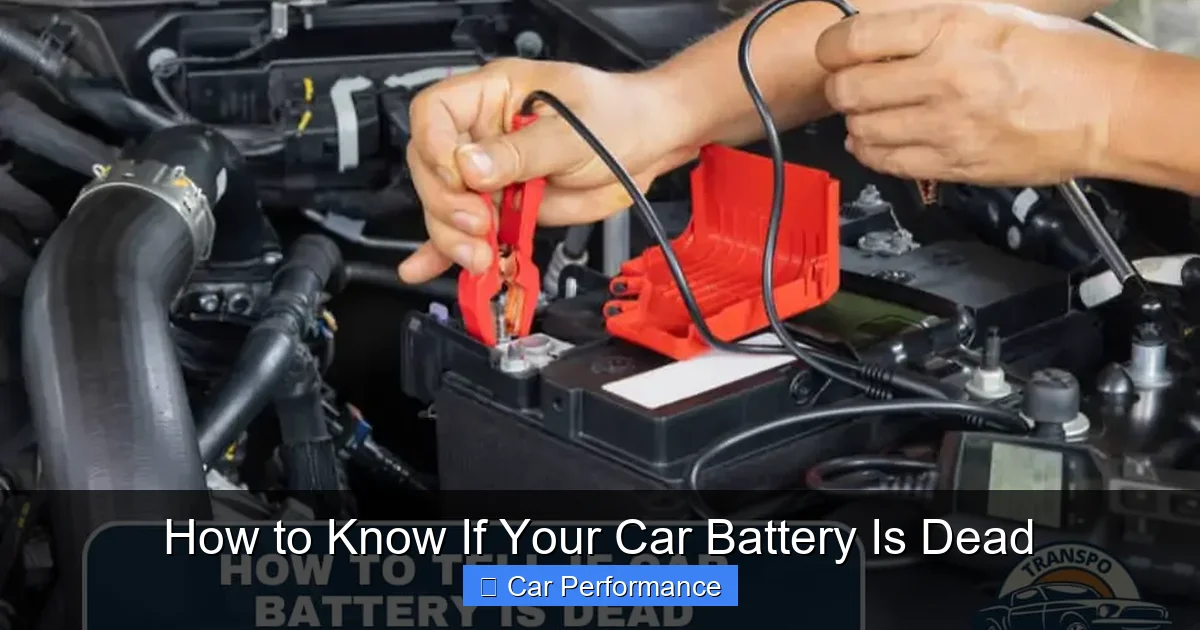
Visual guide about How to Know If Your Car Battery Is Dead
Image source: transpotrends.com
Signs of Terminal Corrosion
Look at the metal posts on top of your battery. If you see a white, ashy, or bluish-green powdery substance, that is corrosion. This buildup acts as a barrier, preventing electricity from flowing efficiently from the battery to the car.
In many cases, cleaning this off with a simple wire brush and a baking soda solution can restore connectivity. However, if the corrosion is heavy and persistent, it may be a sign that the battery is leaking acid, which means it needs to be replaced immediately.
A Swollen Battery Case
If the plastic casing of your battery looks bloated or misshapen, you have a serious problem. This is usually caused by excessive heat or a short circuit that causes the battery to “cook” from the inside out. Extreme temperatures are the enemy of lead-acid batteries. If you see a battery that looks like it is bulging, stop using it right away. A swollen battery is a safety hazard and will not hold a charge regardless of how much you try to jump-start it.
Electronic Alerts and Dashboard Warnings
Modern vehicles are incredibly smart. Most cars built in the last decade have advanced diagnostic systems designed to monitor the health of your charging circuit. If the computer detects a problem, it will let you know via your dashboard display.
The Battery Warning Light
This is the most obvious sign. Most cars have a dashboard icon that looks like a small battery with a plus and minus sign. If this light stays illuminated while you are driving, it indicates that the charging system is not providing enough power to the battery or that the battery itself has failed. Never ignore this light. It is your car’s way of saying, “I am running on borrowed time.”
Random Electrical Glitches
Do your power windows roll up slower than usual? Is your heated seat taking forever to warm up? Does your radio reset itself for no reason? These glitches often stem from fluctuating voltage. When a battery is dying, the electrical current it provides becomes unstable.
This instability can trick the car’s sensors or cause minor electronic components to behave erratically. If you notice multiple small, weird electrical issues, your battery is likely the common denominator.
Testing the Battery Yourself
You do not need a shop to verify your suspicions. There are easy ways to test the battery’s health yourself using tools that are affordable and easy to use. These tests provide the objective data you need to make an informed decision.
Using a Multimeter
A digital multimeter is a must-have tool for any car owner. To check your battery, set the device to DC Voltage. With the engine turned off, touch the probes to the battery terminals (red to positive, black to negative). A healthy battery should read around 12.6 volts. If the reading is 12.2 volts or lower, the battery is significantly undercharged. If the voltage drops drastically when you try to start the car, the battery is almost certainly dead.
The Jump-Start Test
If your car does not start, the classic jump-start test is a great way to isolate the issue. If you hook up your battery to another vehicle and your car starts immediately, it strongly suggests your battery is at fault. However, if the car runs for a while, you shut it off, and it refuses to start again, the problem might actually be your alternator—the component responsible for charging the battery while the engine runs.
Maintenance Tips to Extend Battery Life
Prevention is always better than a cure. By taking a few simple steps, you can help your battery last its full lifespan or even longer. Your habits during the year 2026 can make a big difference in how well your vehicle performs.
Minimize Short Trips
Your car’s charging system needs time to replenish the energy used to start the engine. If you only take very short trips—like driving a few blocks to the store—the alternator doesn’t have enough time to top off the battery. Over time, this leads to “under-charging,” which causes internal chemical damage to the battery plates. Try to drive your car for at least 20 minutes whenever possible to keep the charge levels healthy.
Keep it Clean and Tight
Ensure your battery cables are tight and free of rust or corrosion. A loose cable can cause intermittent starting issues that mimic a dead battery. Additionally, ensure the battery is securely held in its tray. Excess vibration from a loose battery can physically damage the delicate internal plates, leading to an premature death.
When to Replace Your Battery?
Even with perfect maintenance, every battery has a lifespan. Most lead-acid car batteries last between three to five years. If you know your battery is pushing the four-year mark, it is wise to be proactive. Waiting for it to fail in the middle of a winter storm or a summer road trip is never fun.
If you find that you are jump-starting your car frequently, or if a battery specialist has told you that the battery’s “cold cranking amps” (CCA) have dropped significantly, do not delay. Replacing a battery is a relatively affordable maintenance task compared to the cost of a tow truck or the inconvenience of being stranded. Investing in a high-quality replacement battery ensures your vehicle stays reliable for years to come.
By staying observant, keeping your terminals clean, and understanding the simple signs of wear, you can master your vehicle’s health. Your car is a complex machine, but it communicates through these clear, observable signals. Listen to what it is telling you, act when you notice the early warning signs, and you will find that you are never left stuck in the dark.
Frequently Asked Questions
How long does a car battery typically last?
Most car batteries last between three and five years, depending on your driving habits and climate. Extreme temperatures, both hot and cold, can shorten this lifespan significantly by accelerating chemical degradation.
Can a dead battery be recharged?
If the battery is merely drained because you left a light on, it can often be recharged. However, if the battery is physically damaged or has reached the end of its chemical life, it will no longer hold a charge and must be replaced.
Why does my car make a clicking sound when I try to start it?
That clicking sound is usually the starter solenoid engaging but failing to turn the engine over. It happens because there is enough power to move the solenoid but not enough current to rotate the heavy starter motor.
Does the weather affect my car battery?
Yes, weather has a huge impact. Extreme cold slows down the chemical reaction inside the battery, making it harder to start the engine, while extreme heat can cause internal damage and shorten the battery’s overall lifespan.
Is it safe to drive with a battery light on?
You should avoid driving if the battery light is on, as it indicates a failure in the charging system. Your car will only run on the remaining power in the battery, and once that is gone, the vehicle will stall and lose power, including steering and braking assistance.
Can I replace the battery myself?
Yes, replacing a car battery is a straightforward task that most drivers can perform with basic hand tools. Always disconnect the negative cable first, then the positive, and reverse the process when installing the new one to prevent short circuits.