
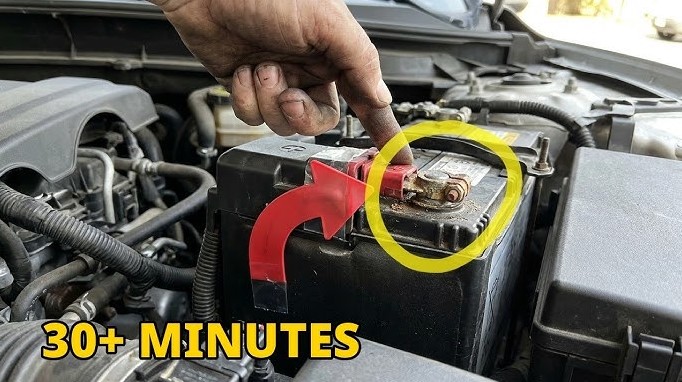
How long to leave a car running to charge battery? It depends on the battery’s state, alternator output, and temperature. Typically, 30 minutes to 2 hours is enough for a minor charge, but a fully drained battery may need several hours or jump-start assistance. Always prioritize safety and avoid overcharging!
This is a comprehensive guide about how long to leave a car running to charge battery.
Key Takeaways
- Battery condition matters: A partially drained battery charges faster than one completely dead.
- Alternator output varies: Modern cars often charge better than older models.
- Temperature impacts charging: Cold weather slows down the process; warm conditions help.
- Don’t exceed 4-5 hours: Prolonged engine run can waste fuel and harm the battery.
- Use a trickle charger for severe cases: If no charging occurs, a portable charger is safer.
- Check for underlying issues: Faulty alternators or bad batteries require professional repair.
Stranded with a dead battery? You’re not alone many drivers face this frustrating situation. But before you crank it up and leave the car running indefinitely, ask: how long to leave a car running to charge battery? The answer isn’t always obvious because it hinges on multiple factors like battery health, alternator efficiency, and environmental conditions.
This guide breaks down everything you need to know to safely recharge your battery without wasting fuel or risking damage. Whether you’re a weekend warrior or a daily commuter, these tips will save you time and hassle.
Factors Affecting Battery Charging Time
Several variables influence how quickly your battery recharges when left running:
1. Battery State of Charge (SoC)
A battery at 50% SoC charges much faster than one nearly dead. For example:
– Partially drained (50-70%): 30–60 minutes of idling might restore enough power to start the car.
– Fully drained (<20%): Expect 2–4 hours or more, depending on alternator output.
2. Alternator Output
Modern alternators typically provide 12–15 amps, while older ones may only deliver 8–10 amps. Check your owner’s manual for specifics. Higher output = faster charging.
3. Temperature Extremes
Cold weather (below freezing) reduces chemical reactions in the battery, slowing charging by up to 50%. Conversely, warm temperatures (but not excessive heat) can speed it up slightly.
4. Electrical Load
Running AC, heated seats, or other accessories draws extra current, leaving less for charging. Turn them off if possible.
Safe Charging Guidelines
To avoid damaging your battery or fuel tank:
1. Ideal Idle Duration
– For minor discharges: 30 minutes to 1 hour.
– For severe drains: 2–3 hours max. Monitor voltage with a multimeter (target: ~12.6V when off).
2. Don’t Leave It Running Forever
Beyond 4–5 hours, the engine wastes fuel unnecessarily. Pro tip: Plug into a 24/7 power outlet instead (if compatible).
3. Use a Trickle Charger for Deep Discharges
If the car won’t start after 3 hours, disconnect the battery and use a smart charger. These devices regulate voltage perfectly for deep-cycle batteries.
Common Mistakes to Avoid
– Overheating the battery: Prolonged idling can cause excessive heat, shortening lifespan.
– Ignoring warning signs: If the check engine light turns on during charging, stop there may be an alternator issue.
– Replacing without diagnosis: A “dead” battery might just need cleaning terminals or replacing a loose connection first.
Practical Tips for Emergency Situations
1. Jump-start first: Try jumper cables or a booster pack before idling – it’s faster and safer.
2. Test the alternator afterward: If the battery dies again soon, have it checked professionally.
3. Keep a portable charger handy: Brands like NOCO or Xantrex offer compact solutions for emergencies.
When to Call a Mechanic
If:
– The battery doesn’t charge even after 5 hours.
– You hear grinding noises from the alternator belt.
– Voltage readings are consistently below 12V (even when running).
These signs point to internal faults needing expert repair.
Conclusion
Knowing how long to leave a car running to charge battery saves money and frustration. Remember: Most batteries recharge within 2–4 hours under normal conditions, but extreme cases require smarter tools like trickle chargers. Always prioritize safety overcharging or ignoring symptoms can lead to bigger repairs. Stay prepared, stay informed, and never let a dead battery derail your day!
FAQs
What’s the minimum time needed to charge a dead battery?
Apart from being dead, a battery usually needs at least 30–60 minutes to regain enough charge for starting. However, deeply drained batteries may require 2+ hours due to slower chemical reactions.
Can I charge my battery overnight?
Yes, but only if the car runs continuously. A 12-hour soak risks overheating the battery or alternator. Better to use a trickle charger overnight for controlled charging.
Does idling hurt fuel economy?
Absolutely. Idling burns fuel without moving the car modern engines waste ~0.3 gallons per hour. For every hour left running, that’s $1–$2 lost at today’s gas prices!
Why does my battery die so fast after idling?
This could mean:
- A failing alternator (not providing enough charge).
- Corroded battery terminals.
- A parasitic drain (e.g., faulty lights or radio).
Test voltage with a multimeter to diagnose.
Is it better to jump-start or idle?
Jumping starts are quicker (seconds vs. hours) and safer for fuel. Use idling only if jump-starting isn’t possible or as a backup measure.
How do I prevent future battery failures?
Regularly clean terminals, avoid short trips (they don’t fully recharge batteries), and consider a higher-capacity battery for frequent driving in cold climates.