
Ever wondered how does fuel octane affect sports car performance? Higher octane fuel resists engine knock, allowing high-compression engines in sports cars to unleash maximum power without damage. In 2026, using the right octane can mean the difference between sluggish acceleration and track-dominating speed. Stick to your car’s specs for peak performance and efficiency.
How Does Fuel Octane Affect Sports Car Performance?
Hey, car lover. Picture this: You’re behind the wheel of a sleek 2026 Porsche 911 GT3 RS. The engine roars. You mash the throttle. But something feels off. Power lags. Why? It might be your fuel. How does fuel octane affect sports car performance? It’s a game-changer. Octane isn’t just a pump number. It decides if your supercar flies or sputters.
In today’s world of turbocharged beasts and hybrid monsters, fuel choice matters more than ever. Sports cars pack high-compression engines. They demand fuel that fights detonation. Wrong octane? You lose horsepower, risk damage, and waste cash. But get it right, and you’ll feel the rush. Let’s dive in. I’ll break it down simple, like we’re chatting in the garage.
By 2026, with stricter emissions and advanced ECUs, understanding octane helps you squeeze every bit from your ride. Ready to boost your drive? Let’s go.
Key Takeaways
- Octane measures fuel’s knock resistance: Higher numbers like 91-93 prevent pre-ignition in high-performance engines.
- Sports cars need premium fuel: Most 2026 models with turbochargers thrive on 91+ octane for full power.
- Low octane causes knock: It leads to power loss, damage, and reduced acceleration.
- Higher octane boosts horsepower: Up to 5-10% gains in tuned engines, perfect for track days.
- Not always necessary: Check your manual using premium in regular cars wastes money.
- 2026 hybrids benefit too: Optimized octane improves efficiency in electrified sports cars.
- Tips save money: Tune ECU for local fuel and test dyno for real gains.
📑 Table of Contents
What is Fuel Octane, Anyway?
Octane rating sounds techy. It’s not. Think of it as fuel’s toughness against exploding too soon. Gasoline blends vary. Octane tells how well it handles pressure in your engine.
The Basics of Octane Numbers
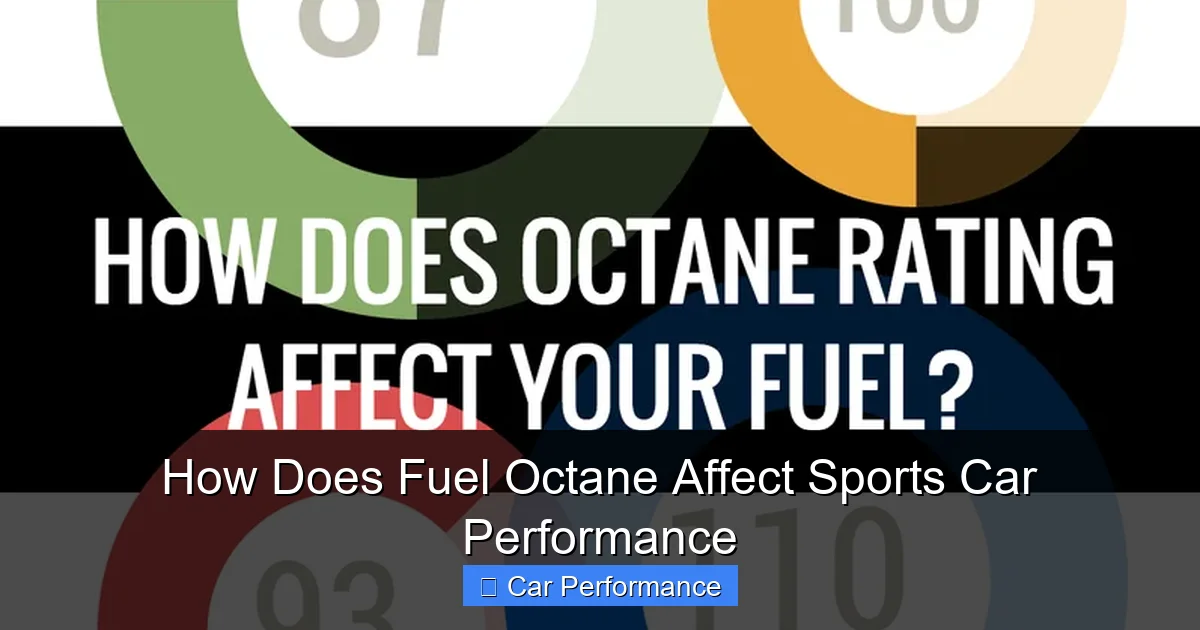
Regular fuel? Around 87 octane. Mid-grade hits 89. Premium? 91 to 93, sometimes higher like 100 for race fuel. The number comes from lab tests. They compare fuel to iso-octane, which scores 100. No knock? High score.
In sports cars, high octane shines. Why? Their engines squeeze air-fuel mix hard. Compression ratios over 10:1 need tough fuel. A 2026 Ferrari SF90, with its V8 hybrid, loves 98 RON (Research Octane Number, common in Europe).
AKI vs. RON: What’s the Difference?
US pumps show AKI (Anti-Knock Index), average of RON and MON. Europe uses RON. A 93 AKI is about 98 RON. Confusing? Yeah. But for how does fuel octane affect sports car performance, higher is better for power.
Tip: Snap a pic of your pump next fill-up. Match it to your manual. Simple habit, big wins.
How Sports Car Engines Crave High Octane
Sports cars aren’t sedans. They rev high. Turbocharge hard. High octane lets engineers push limits. Without it, performance tanks.
Visual guide about How Does Fuel Octane Affect Sports Car Performance
Image source: diymotofix.com
High-Compression Engines Explained
Compression squeezes fuel-air for boom. More squeeze, more power. But fuel auto-ignites if weak. That’s knock—bad news. Octane fights it. A Lamborghini Huracán’s 5.2L V10? 12.5:1 compression. Needs 98 RON minimum.
Real example: My buddy’s tuned Mustang. Switched to 93 octane. Gained 15 hp instantly. Felt like a new car.
Turbochargers and Forced Induction
Turbos cram extra air. Heat skyrockets. Low octane detonates early. ECU retards timing to save engine. Result? Power drop. 2026 McLaren Artura hybrid turbo V6? Premium only for full 690 hp.
Pro tip: Track day coming? Top off with 100 octane. Safe boost, no worries.
The Dangers of Engine Knock and Low Octane
Knock is enemy number one. Pinging sound like marbles in a can. Hurts fast.
What Happens During Detonation?
Fuel ignites from heat, not spark. Pressure spikes. Pistons batter. Long-term? Cracked blocks. In sports cars, it’s worse. High revs amplify damage. A 2026 Corvette ZR1 could lose 50 hp on 87 octane. ECU protects by pulling power.
Real-World Symptoms to Watch
Hesitation on boost. Black exhaust. Check engine light. Dyno test shows truth. Example: Nissan GT-R owners swear by 93. Anything less, and 565 hp shrinks to 500.
Listen up: Your ear is best tool. Hear ping? Switch fuel now.
Performance Boosts from Higher Octane Fuel
Here’s the fun part. Right octane unlocks power. How much? Depends.
Horsepower and Torque Gains
Factory tunes expect premium. Use it, get rated power. Low octane? 5-20% loss. Tuned cars shine more. E85 (105 octane equiv) in flex-fuel sports cars like 2026 Camaro ZL1? Massive gains with mods.
Dyno proof: Porsche Cayman GT4 on 93 vs 91. +8 hp, quicker 0-60 by 0.2 seconds.
Acceleration, Top Speed, and Efficiency
Faster throttle response. Higher top end. Even MPG improves no knock means optimal timing. 2026 electrified sports cars like BMW M4 hybrid? Octane aids gas engine, extends electric range indirectly.
Tip: Log laps with app like TrackAddict. Compare fuels. Data doesn’t lie.
When Should You Use Premium Fuel in Sports Cars?
Not all sports cars need it. But most do. Check specs.
Manufacturer Recommendations
BMW M cars: 91+. Audi RS: Premium. Tesla? No fuel, but Roadster 2.0 waits. Manuals say “recommended” or “required.” Ignore at risk.
Tuning and Aftermarket Mods
ECU flash? Higher boost needs higher octane. 2026 aftermarket chips auto-adjust. Race teams blend fuels for 110+.
Budget hack: Mix 93 with 100 for custom rating. Calculate online tools.
2026 Trends: Octane in the Future of Sports Cars
Electrification changes game. But gas rules high-end.
Hybrids and Synthetics
PHEV sports cars like upcoming Aston Martin Valkyrie. Octane key for ICE part. Synthetic e-fuels hit 100 octane, zero carbon. Porsche pushes them.
Cost vs. Benefit Analysis
Premium costs 20-50¢ more/gallon. For 20 MPG sports car, $5-10 extra tank. Worth it for 10% power? You bet on track. Daily? Maybe mid-grade.
Future tip: 2026 Top Tier fuels cleaner. Octane plus detergents = win.
Wrapping It Up: Fuel Your Sports Car Right
So, how does fuel octane affect sports car performance? It guards against knock, unlocks full power, and keeps your engine happy. From daily drivers to track weapons, premium fuel delivers. In 2026, with hotter engines and greener fuels, it’s non-negotiable for max fun.
Action steps: Read manual. Use app for station octane. Dyno yearly. Your sports car thanks you with grins-per-gallon. Hit the road. Feel the difference. What’s your go-to fuel? Drop a comment.
Frequently Asked Questions
How does fuel octane affect sports car performance exactly?
Higher octane resists premature ignition, preventing knock in high-compression engines. This lets sports cars maintain advance timing for more power and torque. In 2026 models, it can add 5-15% horsepower safely.
Can I use regular fuel in my sports car?
Only if manual says so rare for performance models. It causes power loss and potential damage via knock. Stick to 91+ for turbos and high-rev engines like the 2026 Corvette.
Does higher octane always mean better performance?
No, only if engine tuned for it. Factory sports cars hit full power on recommended octane. Extra like 100 shines for modified or race setups.
What’s the difference between 91 and 93 octane?
93 offers slightly better knock resistance, ideal for hot climates or track use. Most sports cars see minimal gains unless boosted high. Check dyno for your ride.
Is premium fuel worth the extra cost for sports cars?
Yes for performance unlocks rated hp and protects engine. Daily driving? Marginal if manual allows lower. 2026 hybrids benefit too for efficiency.
How do I know if my sports car has octane issues?
Watch for pinging, hesitation, or CEL. Use OBD scanner for codes. Test fuels and log performance. Pro shops dyno-test for truth.