
Replacing an aging car battery can restore your vehicle’s factory-intended performance by ensuring consistent voltage for sensitive electronic systems. While a battery upgrade won’t add horsepower to your engine, it prevents power-related sluggishness, misfires, and efficiency losses common in older, struggling electrical setups.
Have you ever turned the key or pressed the start button only to hear that dreaded, sluggish groan from your engine? We have all been there. It is one of those moments that makes you wonder about the health of your vehicle.
A common question I hear from friends and readers is this: will a new battery improve car performance? It is a great question, especially as we navigate the roads in 2026, where cars are becoming more like rolling computers than simple machines.
When we talk about “performance,” we usually think about how fast a car accelerates or how quickly it can hit a top speed. If you are expecting a new battery to turn your sedan into a race car, I have to be the bearer of honest news.
However, if you are looking to restore the crisp, responsive feel your car had when it rolled off the assembly line, a fresh battery can actually do quite a lot. Let’s dive into how electricity powers your driving experience.
Key Takeaways
- Electrical Stability: A fresh battery provides steady voltage, ensuring the Engine Control Unit (ECU) and sensors operate at peak efficiency.
- Fuel Economy Gains: By reducing the load on the alternator, a healthy battery can help your engine run slightly more efficiently.
- Performance Myths: A new battery does not increase a car’s engine horsepower or torque, as those are mechanical functions.
- Component Longevity: Proper voltage prevents premature wear on your starter motor, alternator, and expensive ignition components.
- Modern Complexity: In 2026, modern cars rely heavily on battery health for sophisticated safety systems and digital infotainment stability.
- Weight Benefits: Upgrading to a lightweight lithium-ion battery can shave pounds off your car, subtly improving handling and acceleration.
The Relationship Between Voltage and Engine Health
How Your Car Uses Electricity
Modern vehicles are marvels of engineering. Every single second you are driving, your car’s brain, or the Engine Control Unit (ECU), is making thousands of calculations. It decides how much fuel to inject, when to spark the plugs, and how to manage the transmission. All these systems rely on one thing: a consistent, reliable flow of electricity. If your old battery is struggling to hold a charge, that voltage might fluctuate.
When voltage fluctuates, your car’s sensors may not get the clean data they need. Imagine trying to read a book in a room where the light bulb is constantly flickering. You might miss a word or two. Your car’s computer acts in a similar way. A new battery ensures the “lights stay on” perfectly, allowing the engine to run exactly as the engineers designed it.
Preventing the “Voltage Drop” Effect
Have you ever noticed your headlights dim slightly when you come to a stop at a red light? That is often a sign of an electrical system under stress. An old battery acts like a clogged pipe for your car’s electrical flow. Even if your alternator is working hard, a weak battery cannot absorb or release energy as quickly as it needs to. Replacing it restores that fluid, high-speed exchange of energy that your car’s sensitive ignition system craves.
Does a New Battery Increase Horsepower?
Separating Fact from Fiction
Let’s be clear: a new battery will not magically add 50 horsepower to your engine. Horsepower is created by the internal combustion process air, fuel, and fire. A battery is not fuel.
However, if your current battery is so weak that it causes intermittent misfires or forces your alternator to work overtime, your car will feel significantly slower than it should. By installing a new battery, you are not “adding” performance; you are “reclaiming” the performance that was lost to poor electrical supply.
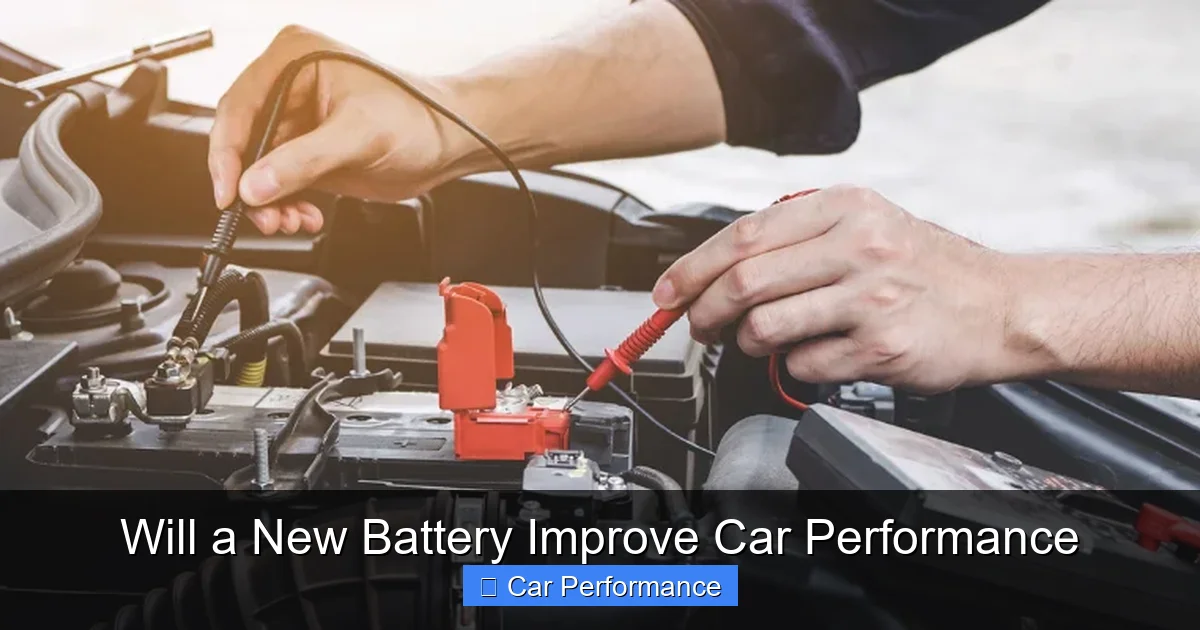
Visual guide about Will a New Battery Improve Car Performance
Image source: cdn-ds.com
The Role of the Alternator
Think of your car’s charging system as a team. The alternator is the generator, and the battery is the buffer. If the battery is weak, the alternator has to work at 100% capacity constantly to keep up with the car’s demands. This creates “parasitic drag” on the engine. While it is a small amount, an engine working less to turn a straining alternator is always going to perform better, even if only by a thin margin.
The 2026 Context: Batteries and Modern Electronics
Infotainment and Safety Systems
In 2026, cars are packed with high-end tech. From adaptive cruise control to massive digital screens and autonomous driving aids, these systems consume massive amounts of power. A sluggish battery can cause these systems to lag or even throw error codes.
You might notice your touchscreen resetting or your safety sensors acting finicky. A new, high-capacity battery ensures that these complex systems have the stable environment they need to keep you safe and entertained.
Regenerative Braking and Start-Stop Technology
Most vehicles today feature “Start-Stop” technology, which turns off your engine at red lights to save fuel. This puts a massive strain on your battery. If your battery is getting old, you might notice this system stops working reliably. A fresh battery allows the car to cycle the engine on and off smoothly, which directly impacts your fuel economy and keeps the car feeling modern and efficient.
Weight Reduction: A Hidden Performance Hack
The Benefits of Lithium-Ion Upgrades
If you are a car enthusiast looking for a genuine performance boost, look at the weight. Traditional lead-acid batteries are heavy, often weighing 30 to 40 pounds. In 2026, many high-performance car owners are switching to lightweight lithium-ion batteries.
These can weigh as little as 10 to 15 pounds. Shaving 20 pounds off the front of your car can improve your power-to-weight ratio and subtly improve handling through corners. It is one of the cheapest ways to make your car feel just a little bit faster.
Impact on Handling
Moving mass closer to the center of the vehicle is always better for handling. While a battery is small in the grand scheme of a 4,000-pound vehicle, racing enthusiasts know that every ounce counts. If you are replacing your battery anyway, considering a lighter-weight option can be a fun way to improve your driving experience.
When Should You Replace Your Battery?
Warning Signs You Should Not Ignore
Performance isn’t just about speed; it is about reliability. If your car takes an extra second to start, your battery is likely failing. Do not wait for the car to be completely dead. A failing battery can eventually take your alternator down with it, which is a much more expensive repair. Look for signs like slow cranking, flickering interior lights, or odd electrical gremlins that seem to come and go.
Maintenance Tips for 2026 Vehicles
Keep your battery terminals clean. Corrosion acts as an insulator, blocking the flow of electricity. A simple wire brush and a bit of baking soda solution once a year can keep your connections perfect. Also, if you plan on leaving your car parked for a long time, use a battery tender. This keeps the chemistry inside the battery healthy, extending its life by years.
Conclusion: Is It Worth It?
So, will a new battery improve car performance? The answer is a resounding yes, provided you have the right expectations. You won’t be winning drag races just because you swapped out your power cell, but you will feel the difference in the way your car starts, the way its sensors operate, and the overall stability of its electrical systems. In 2026, where our cars rely on complex software to run smoothly, a strong battery is the foundation of a healthy vehicle.
Do not let a weak battery hold your car back. It is a simple, affordable upgrade that pays dividends in reliability and smoothness. Treat your car to a fresh power source, and you will likely find that it drives just a little bit more like the machine it was meant to be. Stay charged and happy driving!
Frequently Asked Questions
Does a new battery make the engine run smoother?
Yes, a fresh battery provides consistent voltage to the ignition system and sensors, which can eliminate minor misfires and hesitation. This leads to a smoother idle and more responsive throttle behavior.
Can a bad battery ruin my alternator?
It can. A failing battery often forces the alternator to work at maximum capacity to compensate for the lack of stored power, which can lead to premature alternator failure and costly repairs.
How often should I replace my car battery in 2026?
Most modern batteries last between three to five years depending on the climate and usage. It is best to have your battery tested annually once it passes the three-year mark.
Does a battery upgrade help with fuel efficiency?
While the gains are minor, a healthy electrical system allows your alternator to run more efficiently. This creates less drag on the engine, which can lead to a slight improvement in overall fuel economy.
What is the benefit of a lithium-ion battery for a standard car?
Lithium-ion batteries are much lighter and hold a charge longer than lead-acid ones. However, they are generally best suited for performance-oriented vehicles rather than standard commuter cars due to cost.
Will my infotainment system work better with a new battery?
Absolutely. Modern infotainment systems are sensitive to voltage drops; a new battery prevents screen flickering, system reboots, and lag, ensuring your vehicle’s tech runs as intended.