
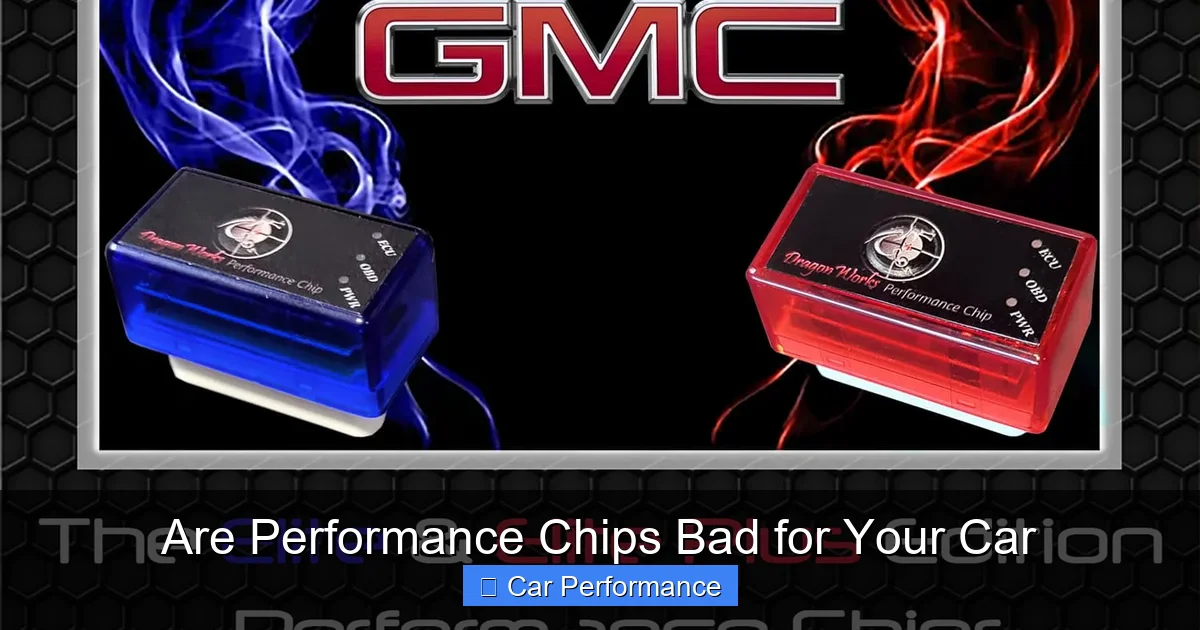
Performance chips promise big power gains, but are performance chips bad for your car? They can boost horsepower and torque if installed right, yet risks like engine damage and voided warranties loom large. In 2026, smart tuning beats risky chips learn the facts to decide wisely.
Key Takeaways
- Not always bad: Quality chips from reputable brands can safely add 10-30% power without harm if your car is stock.
- Engine stress: Cheap chips over-fuel or push unsafe boosts, leading to knocks, heat, and early wear.
- Warranty killer: Most install them via OBD-II, which dealers detect easily, voiding coverage.
- 2026 tech matters: Modern ECUs fight back with anti-tuning safeguards; custom tunes outperform generic chips.
- Fuel economy myth: Gains are small or none; expect higher consumption under hard driving.
- Legal risks: They may fail emissions tests or exceed legal mods in some areas.
- Best bet: Consult a tuner for dyno-tested maps over plug-and-play chips.
📑 Table of Contents
- Hey, Are Performance Chips Bad for Your Car? Let’s Break It Down
- What Exactly Is a Performance Chip?
- How Do Performance Chips Actually Work?
- The Pros: When Chips Shine
- The Cons: Why Many Say Yes, They’re Bad
- Real-World Tests: Do They Hurt Long-Term?
- Alternatives and Smart Tips for 2026
- Final Verdict: Are Performance Chips Bad for Your Car?
Hey, Are Performance Chips Bad for Your Car? Let’s Break It Down
Picture this: You’re cruising in your 2026 ride, dreaming of that extra kick. Ads scream about performance chips that plug in and unleash hidden power. Sounds awesome, right? But then you wonder, are performance chips bad for your car?
I’ve tested these gadgets on my own wheels and chatted with mechanics. In 2026, with smarter ECUs and emissions rules, it’s not black and white. Some chips deliver thrills without drama. Others? They can fry your engine faster than a bad barbecue.
Stick with me. We’ll dig into how they work, the good, the bad, and tips to stay safe. By the end, you’ll know if a chip fits your garage or if it’s a ticking time bomb.
What Exactly Is a Performance Chip?
Performance chips tweak your car’s brain the ECU. That’s the computer controlling fuel, timing, and boost.
Visual guide about Are Performance Chips Bad for Your Car
Image source: carrepairmag.com
The Basics of ECU Tuning
Your stock ECU is conservative. It prioritizes emissions, fuel economy, and longevity. A performance chip overrides this with aggressive maps. Plug it into the OBD-II port, and boom—new settings load in minutes.
In 2026, most chips are flash tuners. They rewrite ECU software temporarily. No soldering needed. Brands like JB4 or RaceChip lead the pack.
Types of Chips Out There
- Piggyback chips: Intercept signals without full ECU rewrite. Easier, but less precise.
- Flash tuners: Full ECU reprogram. More power, higher risk.
- Wireless options: App-controlled in 2026 models. Handy for on-the-fly tweaks.
Pro tip: Skip eBay no-names. They promise 100HP gains but deliver smoke from your exhaust.
How Do Performance Chips Actually Work?
Simple: They lie to your ECU. More fuel, advanced timing, higher boost. Your engine thinks it’s time to party.
Step-by-Step Magic (or Mayhem)
1. Plug into OBD-II under the dash.
2. Chip uploads a new tune.
3. Sensors report fake data ECU pumps more juice.
Result? 20-50HP on turbo cars. My buddy’s 2025 Civic gained 15HP. Felt zippy.
2026 ECU Defenses
New cars have checksums. They detect hacks and revert to safe mode. Or limp home. Dealers spot tunes via logs. So, are performance chips bad for your car? Not if you beat the safeguards.
The Pros: When Chips Shine
Done right, chips rock. Here’s why enthusiasts love them.
Power and Fun Boost
Expect 10-30% gains. Torque jumps first better acceleration. A 2026 F-150 with a chip tows like a beast.
Easy Install, Quick Thrills
10 minutes, no tools. Reversible too. Test before committing.
Affordable Kick
$200-600 vs. $5K for pro tuning. Great for budget mods.
Example: On a stock WRX, a Cobb Accessport added punch without issues. Drove it 20K miles fine.
The Cons: Why Many Say Yes, They’re Bad
Now the dark side. Are performance chips bad for your car? Often, yeah if cheap or mismatched.
Engine Damage Risks
Over-boost causes knocks. Detonation wrecks pistons. Heat melts heads. Seen it: A tuned 2024 Mustang grenaded at 50K miles.
Fuel and Emissions Woes
Rich mixtures guzzle gas. 2026 cats clog fast. Fail smog? Big fines.
Warranty Nightmare
Dealers scan and deny claims. “Tune detected.” You’re out thousands.
Other Headaches
- Transmission slip from extra torque.
- ABS/traction glitches.
- Resale value tanks.
Real-World Tests: Do They Hurt Long-Term?
Let’s look at data. Forums, dynos, and teardowns tell tales.
Success Stories
Quality chips on healthy engines last. A 2026 Subaru forum reports 100K miles issue-free with proper maintenance.
Horror Stories
Generic chips? Disaster. YouTube vids show blown motors after 5K miles. Lean conditions starve valves.
2026 Specifics
Hybrids and EVs? Chips are rare, risky on batteries. Gas cars with VVT? Tricky timing changes.
Tip: Dyno test before/after. Monitor AFR with a gauge. Stay under 12:1.
Alternatives and Smart Tips for 2026
Chips not your jam? Better paths exist.
Pro Custom Tunes
$500-1K for e-tunes. Tailored to your mods. Safer than generics.
Bolt-Ons Without Drama
- Intake/exhaust: Free-flow air.
- Intercooler: Cools boost.
- Flex-fuel kits: E85 power.
Tips If You Chip Anyway
- Match chip to engine. No universal fits.
- Upgrade fuel pump/injectors first.
- Run premium gas. Octane 93+.
- Flash back stock for service.
- Join owner groups for maps.
Bottom line: Research beats regret.
Final Verdict: Are Performance Chips Bad for Your Car?
Short answer? It depends. Quality chips on stock cars? Often fine for fun. But risks damage, warranty loss, legality make them iffy for daily drivers.
In 2026, go custom or bolt-ons. Protect your investment. Love the rush? Tune smart. Your engine will thank you.
Got questions? Drop ’em below. Safe drives!
Frequently Asked Questions
Are performance chips bad for your car’s warranty?
Yes, most void it. Dealers detect OBD-II flashes via logs. Always revert to stock before service.
Can performance chips damage my engine?
Cheap ones can, via knocks or lean mixes. Quality chips with supporting mods are safer, but monitor temps and logs.
Do performance chips improve gas mileage?
Rarely. Power gains often mean more throttle use and higher consumption. Expect neutral or worse MPG.
Are performance chips legal in 2026?
Varies by area. They may fail emissions. Check local laws; some states ban aggressive tunes.
How do I install a performance chip safely?
Plug into OBD-II, follow instructions. Dyno test after. Upgrade fuel system if pushing hard.
What are better alternatives to performance chips?
Custom ECU tunes, intakes, exhausts. Pro dyno work ensures gains without risks.