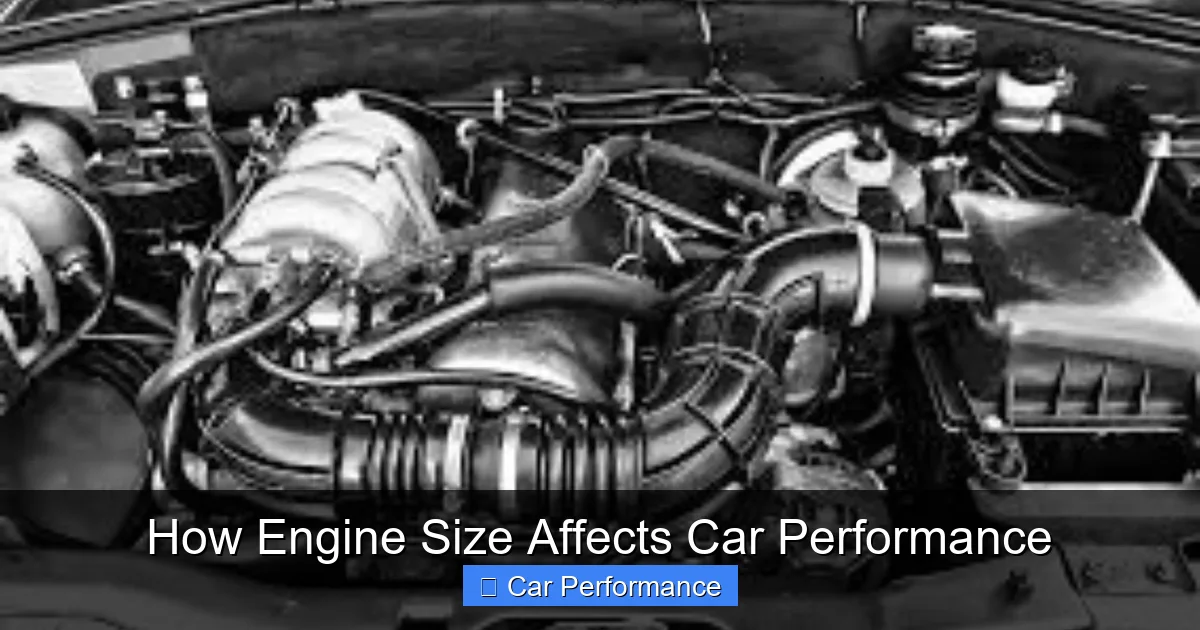
Engine size plays a huge role in how your car performs, influencing power, speed, and even fuel use. Bigger engines often mean quicker acceleration and higher top speeds, but they can guzzle more gas. In 2026, with EVs rising, understand equivalents to choose smart.
How Engine Size Affects Car Performance?
Hey, car lover! Ever wondered why some cars zoom off the line while others chug along? It often boils down to engine size. How engine size affects car performance is a hot topic, especially in 2026 as we blend gas guzzlers with electric beasts.
Engine size, measured in liters or cubic inches, tells you how much air and fuel the engine can gulp. Bigger means more boom. But it’s not just raw power. Think acceleration, top speed, fuel sip, and even how the car feels on twisty roads. Stick with me. We’ll break it down simple, like chatting over coffee.
In this guide, we’ll explore how engine size shapes your drive. From daily errands to weekend blasts. By the end, you’ll pick your next ride like a pro. Let’s rev up!
Key Takeaways
- Bigger engines boost power: More displacement means more horsepower for faster acceleration.
- Fuel efficiency drops with size: Larger engines burn more gas, especially in city driving.
- Top speed rises: Big engines handle highways like pros with sustained high speeds.
- Weight matters: Engine size adds heft, which can hurt handling in tight turns.
- Modern twist in 2026: Electric motors mimic engine size via power output for similar effects.
- Balance is key: Match engine size to your needs daily commute or track days?
- Turbo tech shrinks needs: Small turbo engines rival big ones in performance.
📑 Table of Contents
What Exactly is Engine Size?
Engine size is the total volume inside the cylinders. It’s like the lungs of your car. Measured in liters (L) for most modern cars. A 2.0L engine displaces 2 liters of space.
How We Measure It
Displacement adds up all cylinder volumes. Four cylinders at 500cc each? That’s 2.0L. Simple math. Bigger size pulls in more mix for bigger bangs.
Why care? It sets the base for power. But tech like turbos changes the game. A tiny 1.0L turbo can punch like a 2.5L naturally aspirated.
Common Sizes in 2026
Commuters love 1.5L to 2.0L. Sporty hats grab 3.0L+. Supercars? 6.0L V12s still rule tracks. EVs? We talk kW now, but battery packs mimic big engine vibes.
Tip: Check specs. A 2.0L hybrid crushes pure gas rivals in pep.
Power and Acceleration: The Thrill Factor
Want neck-snapping starts? Engine size shines here. How engine size affects car performance starts with grunt.
Visual guide about How Engine Size Affects Car Performance
Image source: tiresizecompare.com
Horsepower Basics
Bigger engines make more horses. A 1.6L might hit 120 hp. Jump to 5.0L V8? 400+ hp easy. More air and fuel equals more push.
Real talk: 0-60 mph times drop with size. Tiny engines take 10 seconds. Big boys? Under 4.
Examples That Wow
Take the 2026 Toyota Camry. Base 2.5L: 203 hp, 7.5 sec 0-60. Optional 3.5L V6: 301 hp, 5.8 sec. Feel the diff?
Or Ford Mustang. 2.3L EcoBoost (310 hp) vs 5.0L Coyote (480 hp). The V8 launches like a rocket. Test drive one. You’ll grin.
Tip: For stoplight fun, size up. But pair with good tires.
Top Speed and Highway Cruising
Highways call for sustained speed. Big engines laugh at 80 mph winds.
Aerodynamics and Gearing
Large displacement overcomes drag. They rev high without strain. Small engines huff at top end.
A 1.0L tops at 120 mph maxed. A 4.0L? 160+ mph comfy.
Real-World Rides
2026 Honda Civic 1.5L turbo: 134 mph top. BMW M3 3.0L twin-turbo: 180 mph limited. Highway passes? M3 owns.
Pro tip: For road trips, big is best. Less downshifting, smoother vibes.
Fuel Efficiency: The Wallet Watcher
Power costs gas. How engine size affects car performance hits your pump stops.
Why Big Eats More
More cylinders, more thirst. Idling alone burns extra. City driving? Ouch.
A 2.0L gets 30 mpg. 5.0L? 18 mpg. Math hurts.
2026 Efficiency Hacks
Hybrids shrink the gap. Toyota Prius 1.8L hybrid: 58 mpg. Still peppy.
EVs flip it. Tesla Model 3 “long range” (75 kWh pack, like a big engine) sips electrons at 4 mi/kWh.
Tip: Track your mpg app. Downsize for savings unless you haul.
Handling, Weight, and Everyday Feel
Size adds pounds. How engine size affects car performance isn’t just straight line.
Weight Penalty
Big iron fronts heavy. A 6.2L Corvette weighs 3,500 lbs. Nimble Miata 1.5L? 2,300 lbs. Turns like a go-kart.
Balance Tips
Front-engine heavies understeer. Mid-engine exotics dance.
Example: Porsche 911 3.0L flat-six. Perfect weight split. Glues corners.
Daily driver? 2.0L sweet spot. Zippy without boat feel.
Modern Twists: Turbos, Hybrids, and EVs in 2026
Engine size evolves. Downsizing rules with tech.
Turbo Magic
1.5L turbo = 2.5L power. VW Golf GTI proves it. 241 hp from peanuts.
Hybrid Power
Electric boost fills low-end gaps. Rivian R1T 400+ hp “engine” equivalent flies.
EV Equivalents
Battery kWh acts like liters. 100 kWh packs torque like V8s. Instant shove.
2026 trend: Right-size. Commute small. Adventure big.
Tip: Test torque curves. Flat = boring. Peak early = fun.
Choosing the Right Size for You
Match life to liters. City rat race? 1.5-2.0L. Family hauler? 3.0L V6. Track? Unlimited.
Budget and Maintenance
Big = pricey parts. Oil changes sting. Insure smart.
Future-Proof Picks
Go mild hybrid. Best of both. 40 mpg, 250 hp.
Final tip: Drive before buy. Feel how engine size affects car performance yourself.
Wrapping up, engine size shapes every twist, blast, and cruise. Bigger thrills but costs. In 2026, smart tech lets small punch big. Now you know. Hit the road wiser. What’s your dream engine? Drop a comment!
Frequently Asked Questions
Does a bigger engine always mean better performance?
No, not always. Turbos and hybrids let small engines match big ones in power. But for raw top-end speed, size wins.
How does engine size affect fuel economy?
Larger engines guzzle more fuel due to higher displacement. Expect 20-30% worse mpg in big vs small. Hybrids help close the gap.
What’s the ideal engine size for daily driving in 2026?
A 1.5-2.0L turbo or hybrid hits sweet spot. Great pep, 40+ mpg, low cost. Perfect for commutes.
Do electric cars have ‘engine size’?
Sort of. Power in kW or battery kWh acts like it. A 100 kW motor feels like a 3.0L for acceleration.
Can a small engine handle towing?
Not well. Big engines (4.0L+) torque best for trailers. Check ratings underpowered strains and hurts mpg.
How has turbo tech changed engine size needs?
It shrinks them. A 2.0L turbo rivals 4.0L old-school power. More efficient, same thrill in 2026 cars.