
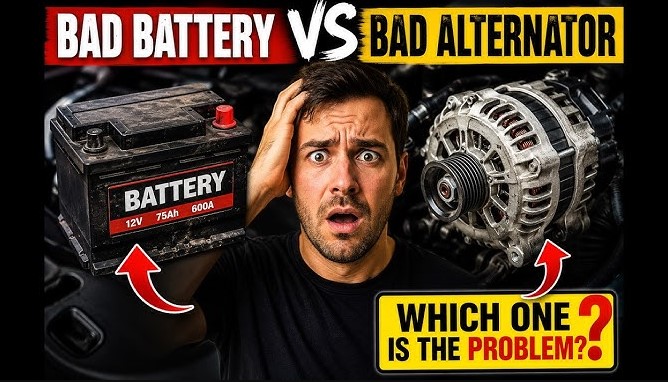
If your car won’t start, it’s easy to blame the battery, but the alternator might be the real culprit. This guide helps you identify the exact symptoms of a failing electrical system so you can make the right repair decision before calling a mechanic.
There is nothing quite as frustrating as turning your key or pressing the start button only to be met with silence or a sad clicking sound. Every driver will face a dead battery or an alternator failure at least once in their life.
By 2026, our vehicles are more connected than ever, relying heavily on stable electrical systems to run navigation, safety sensors, and climate control. When things go wrong, knowing how to distinguish between a bad battery and a faulty alternator can save you a tow truck fee and a massive repair bill.
Many people assume a dead car always means a dead battery. While that is often the case, the alternator the component responsible for charging the battery while you drive is a common hidden failure point. If you replace your battery but the real issue is your alternator, you will just find yourself stranded again in a few days. Let’s break down exactly how you can tell the difference and get your car back on the road safely.
Key Takeaways
- The Battery’s Role: The battery provides the initial surge of power needed to crank the engine and start the car.
- The Alternator’s Role: Once the engine is running, the alternator takes over to power electronics and recharge the battery.
- Start-up vs. Running: If the car won’t start at all, it is likely the battery; if it dies while driving, it is likely the alternator.
- Warning Lights: Pay attention to your dashboard, specifically the battery-shaped icon or a check engine light.
- The Multimeter Test: You can diagnose most electrical issues at home using a simple multimeter to check voltage levels.
- Age Matters: Most car batteries last 3 to 5 years, so check your service records if you are unsure of the age.
Understanding Your Car’s Electrical System
To fix the problem, you first need to understand how the components work together. Think of your car’s electrical system like a team. The battery is the sprinter; it provides a quick, powerful burst of energy to get the engine turning.
Once the engine starts, the alternator becomes the long-distance runner. It generates electricity to keep the spark plugs firing, the lights bright, and the radio playing, all while recharging the battery for the next time you turn the key.
The Battery: The Starting Power
Your battery is primarily designed for high-amperage output during ignition. If your battery is reaching the end of its life, it loses its ability to hold a charge. This is especially true in extreme weather, where cold mornings put massive strain on chemical reactions inside the battery cells. A common sign of a weak battery is sluggish engine cranking, where the engine sounds like it’s struggling to “catch” as you start it.
The Alternator: The Power Generator
The alternator acts as a miniature power plant under your hood. It is turned by a serpentine belt connected to the engine. If the belt slips or the internal coils of the alternator fail, the system stops receiving electricity. If the alternator dies while you are driving, your car will continue to run off the battery’s remaining reserve power until it is completely drained. At that point, your engine will simply shut off, no matter how much fuel is in the tank.
Signs Your Battery Is the Problem
Identifying a battery issue is usually straightforward because these components have a finite lifespan. In 2026, most modern vehicles use absorbent glass mat (AGM) or traditional lead-acid batteries that last between three and five years. If yours is older than that, it should be the first suspect.
The “Click-Click” Sound
When you turn your key and hear a rapid clicking sound, it is usually the starter solenoid struggling to engage. This happens when the battery has enough energy to trigger the solenoid but not enough to actually spin the heavy engine. This is a classic symptom of a battery that lacks the “cold cranking amps” required to start the vehicle.
Physical Signs of Failure
Open your hood and look at the battery terminals. If you see a white, crusty, or powdery substance around the metal posts, that is corrosion. Corrosion creates resistance, preventing electricity from flowing freely from the battery to the car. Sometimes, cleaning these terminals with a mixture of baking soda and water is all it takes to get your car starting normally again.
The Interior Lights Test
A simple way to check your battery is to turn on your interior dome light and then try to start the engine. If the light dims significantly or goes out entirely while you try to crank the engine, your battery is likely drained or dead. The power is being sucked away by the starter, leaving nothing left for the lights.
Signs Your Alternator Is the Problem
Alternator issues are often more insidious because they don’t always stop the car from starting immediately. Instead, they cause a slow decline in performance. If you have to jump-start your car, drive for twenty minutes, and then find it won’t start again, your alternator is almost certainly the one failing to charge the battery.
Electrical Quirks and Glitches
Because the alternator powers your electronic systems while driving, a failing unit will cause your electronics to act strange. You might notice your headlights flickering or dimming while you’re stopped at a red light but brightening up when you press the gas pedal. This happens because the alternator output is inconsistent and relies on engine speed to generate power.
Strange Noises
The alternator contains internal bearings that spin at thousands of revolutions per minute. When these bearings wear out, they make a distinct grinding or growling sound. If you hear a whining noise coming from the engine bay that changes pitch as you accelerate, have your alternator checked immediately before it seizes up completely.
The Battery Warning Light
Modern dashboards are equipped with a charging system indicator, usually shaped like a battery. If this light stays illuminated while you are driving, it is a direct warning from your car’s computer that the alternator is not outputting the correct voltage. Do not ignore this light; it is telling you that you are running on borrowed time.
How to Use a Multimeter to Diagnose?
You don’t need to be a professional mechanic to perform a basic electrical test. A digital multimeter is an inexpensive tool that every car owner should have in their garage in 2026. Here is the step-by-step process to perform a voltage test.
Step 1: The Static Battery Test
Turn your car off and set your multimeter to DC voltage (20V setting). Place the red probe on the positive (+) battery terminal and the black probe on the negative (-) terminal. A healthy battery should show between 12.4 and 12.6 volts. If the reading is below 12.2 volts, your battery is significantly discharged.
Step 2: The Running Alternator Test
Start your car and keep the probes on the terminals. If the alternator is healthy, the voltage should climb to somewhere between 13.5 and 14.8 volts. If the voltage remains at 12.6 or lower, the alternator is not charging the battery, and it needs to be replaced.
If the voltage goes above 15 volts, your alternator’s voltage regulator is likely damaged and is “overcharging” the system, which can fry your battery and delicate computer sensors.
Preventative Maintenance Tips
Being proactive is better than being stranded on the side of the road. In 2026, vehicle health monitoring systems are great, but they cannot replace regular visual inspections. Follow these simple tips to extend the life of your electrical components.
Check Your Serpentine Belt
The alternator is driven by the serpentine belt. If the belt is cracked, frayed, or loose, it cannot turn the alternator pulley efficiently. Check your belt once every oil change to ensure it is in good condition. A loose belt can cause intermittent power issues that mimic an alternator failure.
Avoid Extreme Discharge
Try not to leave your lights on or accessories running when the engine is off. Deep discharging a car battery significantly shortens its lifespan. If you know your car will be sitting for more than two weeks, consider using a trickle charger or battery maintainer. These devices keep the battery at a constant, healthy voltage, which prevents sulfation—a chemical buildup that ruins lead-acid batteries over time.
Conclusion
Determining how do you know if alternator or battery is bad comes down to observing your car’s behavior during startup and while driving. If the issue is strictly related to starting the engine, lean toward a battery problem. If the issue involves the car dying while in motion or electronics acting erratically, the alternator is likely the primary suspect.
By using a multimeter and keeping an eye on your dashboard warning lights, you can confidently diagnose your vehicle’s electrical system. When in doubt, most auto parts stores offer free diagnostic testing for both batteries and alternators. Don’t hesitate to take advantage of these services.
Addressing a failing alternator before it quits completely can save you from a more expensive repair if it damages other electrical components in the process. Keep your connections clean, check your belt condition, and stay aware of your vehicle’s quirks you will be much more likely to avoid that dreaded silence when you turn the key.
Frequently Asked Questions
Can I drive with a bad alternator?
You can drive for a very short distance until the battery’s remaining power is exhausted, but it is extremely risky. Once the battery dies, the engine will shut off, and you will lose power steering and potentially braking assistance, making it dangerous to be on the road.
What does it cost to replace a battery versus an alternator?
A battery typically costs between $150 and $250 depending on the type and warranty, while an alternator is more expensive, often ranging from $400 to $900 including labor. Always confirm the diagnosis before buying parts, as they are not interchangeable.
Does a cold climate affect the battery or alternator more?
Cold weather primarily affects the battery by slowing down the chemical reactions needed to produce power, making it harder to start the engine. The alternator is generally unaffected by temperature, though its belt can become brittle and prone to snapping in extreme cold.
How long should a car battery last in 2026?
Most modern automotive batteries are designed to last between 3 and 5 years under normal driving conditions. Factors like frequent short trips, high heat, and heavy use of electrical accessories can shorten this lifespan significantly.
Will a bad alternator cause a check engine light?
Yes, many modern vehicles have onboard diagnostics that will trigger a check engine light or a specific charging system warning if the alternator output voltage is outside of the normal range. It is best to scan the car for codes to see if the computer is pointing to a charging system fault.
Can I jump-start a car with a bad alternator?
You can jump-start the car, but it will likely stall again shortly after you remove the jumper cables if the alternator is not producing electricity. The battery will not receive a charge, meaning the car will rely entirely on its limited capacity until it dies again.