
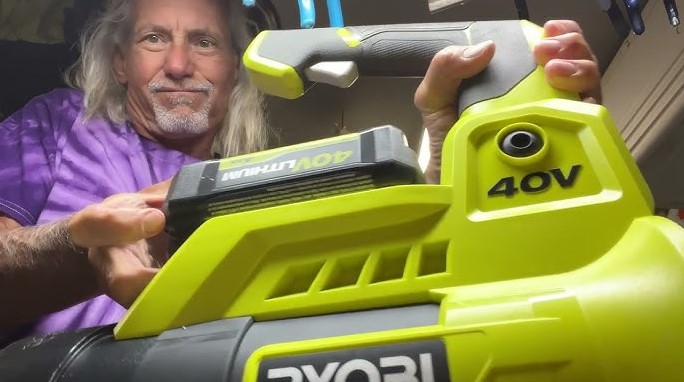
Charging a Ryobi 40v battery without its official charger is a complex technical task that requires extreme caution to avoid fire or injury. While specialized power supplies can theoretically bypass the dock, it is highly recommended to use certified Ryobi equipment to protect your battery cells.
We have all been there. You are halfway through a project in your garage, the grass is only half-mowed, or your power tools go silent right when you need them most. You reach for your charger, only to realize it is missing, broken, or locked away somewhere inaccessible. If you are wondering how to charge a Ryobi 40v battery without a charger, you are certainly not alone in your frustration. As we head into 2026, many DIY enthusiasts are looking for creative ways to keep their tools running, but it is important to understand the risks involved before you start splicing wires.
The Ryobi 40v ecosystem is built for performance, reliability, and ease of use. However, the technology inside these lithium-ion packs is highly sophisticated. Charging them is not as simple as connecting two wires to a power source. There is a delicate dance of voltage regulation, temperature sensing, and current limiting happening inside that plastic casing. Before we dive into the “how,” we must talk about the “should.” While there are technical workarounds, the safest route is always the official one. Let’s explore what you need to know to keep your tools powered effectively.
Key Takeaways
- Voltage Matching: Always ensure your power source provides a constant voltage that matches the battery’s requirements to prevent cell damage.
- BMS Risks: Ryobi batteries contain a Battery Management System (BMS) that monitors heat and voltage; manual charging can bypass these safety protocols.
- Fire Hazard: Lithium-ion batteries are volatile; improper charging can lead to thermal runaway and dangerous chemical fires.
- Connector Challenges: The proprietary Ryobi terminal design makes direct wiring difficult and prone to short-circuits.
- Warranty Void: Attempting to charge a battery outside of manufacturer specifications will immediately void your Ryobi warranty.
- Alternative Power: Using an inverter or a solar-powered Ryobi station is a safer way to use your battery if you have a dead wall outlet.
Understanding the Ryobi 40v Battery Architecture
To understand why charging these batteries is tricky, you need to look at what is inside. A Ryobi 40v battery is actually a series of smaller lithium-ion cells linked together. These cells require a very specific charging profile—a constant current followed by a constant voltage phase. Without this exact cycle, the cells can become unbalanced, lose their capacity, or even become unstable.
The Role of the Battery Management System (BMS)
Inside every Ryobi 40v pack sits a small circuit board known as the Battery Management System (BMS). Think of this as the “brain” of the battery. It communicates with your official Ryobi charger to report temperature, individual cell voltage, and overall state of charge. When you try to charge the battery without the official dock, you are effectively cutting off that brain. Without the BMS communicating with a smart charger, the battery may refuse to accept a charge or, worse, accept too much power.
Proprietary Terminal Layouts
If you look at the bottom of your battery, you will see multiple contact points, not just a simple positive and negative terminal. These extra pins are for data communication and thermal monitoring. Trying to bypass these pins by connecting power directly to the main terminals can trick the battery into an error state, causing the internal fuse to blow permanently. This is why standard power supplies often fail to work with these batteries.
Methods for Supplying Power When the Charger is Gone
While we strongly advise against DIY wiring, some advanced users look into using DC power supplies. If you have an adjustable bench power supply, you can technically set it to the peak voltage of a fully charged 40v battery (usually around 42v). However, this requires precision equipment that most people do not have lying around the garage.
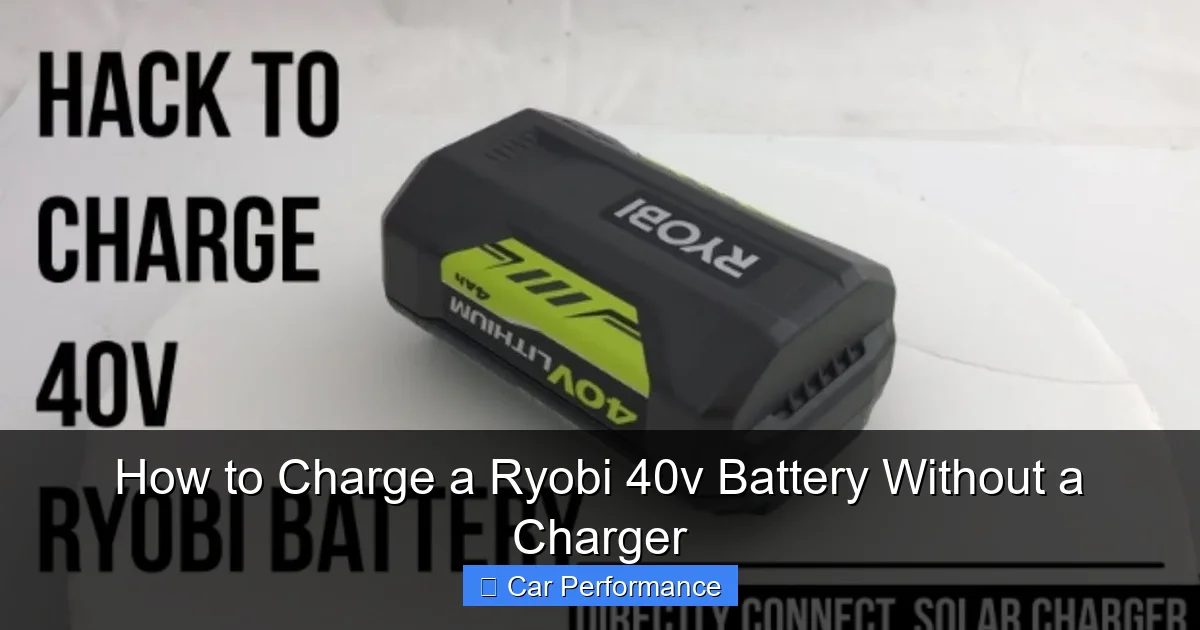
Visual guide about How to Charge a Ryobi 40v Battery Without a Charger
Image source: vsanalysis.com
Using an Adjustable Bench Power Supply
If you have access to a lab-grade DC power supply, you can monitor both the voltage and the amperage. You must set the voltage to match the battery exactly. If the voltage is too high, the battery could swell or catch fire. If the current (amps) is too high, the internal components will overheat immediately. This method is slow, requires constant supervision, and is strictly for those with an advanced background in electrical engineering.
The Danger of “Jumper” Methods
There are internet myths about using jumper cables or car chargers to power these batteries. Please avoid these at all costs. Car batteries operate at 12v, while your Ryobi battery needs 40v. Connecting them directly will not only fail to charge your battery, but it could also cause your car battery to explode or melt your wires. There is no simple way to bridge this voltage gap safely without complex circuitry.
Safety Precautions and Fire Prevention
Lithium-ion batteries are not like old-school lead-acid batteries. They are highly energy-dense and very sensitive to physical damage or electrical abuse. When you charge a battery outside of its intended design, you are operating outside of safety guardrails.
Recognizing Thermal Runaway
Thermal runaway is the term for a chain reaction inside a battery where the heat increases uncontrollably until the casing ruptures or catches fire. If your battery begins to hiss, bulge, emit a sweet chemical smell, or get too hot to touch while you are experimenting, stop immediately. Move the battery to a non-flammable surface, like concrete or dirt, and step away.
The Importance of Overcharge Protection
The standard Ryobi charger is “smart.” It knows when the battery is full and cuts off the power. A DIY setup lacks this cutoff. If you forget to unplug your manual charging rig, the battery will continue to take in energy. This leads to internal gas build-up and is the number one cause of battery-related house fires. Never leave a battery unattended if you are using non-standard equipment.
Alternatives to Charging Without a Charger
Before you risk your battery or your safety, consider if there are other ways to solve your power problem. In 2026, the marketplace for Ryobi tools is wider than ever. You might be able to find a solution that doesn’t involve risky electrical modifications.
Borrowing or Buying Second-hand
Ryobi batteries and chargers are incredibly common. Check your local community groups, garage sales, or second-hand marketplaces. Often, people have spare chargers from old tools they no longer use. It is almost always cheaper to pick up a used, official Ryobi charger than it is to replace a ruined battery pack or deal with the aftermath of an electrical fire.
Using the Ryobi Solar or Inverter Systems
Ryobi has expanded its lineup to include solar power stations and vehicle charging adapters. If you are working in a remote area, consider investing in a 40v inverter. This allows you to utilize the power you have already stored in your batteries rather than worrying about finding a wall outlet to charge them. It is a much more efficient way to manage your energy during long projects.
What to Do If Your Charger Is Actually Just Broken
Sometimes, we think we need to charge the battery manually because we believe the charger is dead. Before you give up, perform some basic troubleshooting. Sometimes, the charger isn’t the problem the battery might just be in “sleep mode.”
Waking Up a “Dead” Battery
If a Ryobi 40v battery has been sitting for months, the BMS may shut it down to prevent total cell degradation. Sometimes, simply putting it into a working charger for a few seconds will wake it up. If you don’t have a charger, take it to a local hardware store that carries the brand. They often have display chargers that you can use for a moment to test if the battery is truly dead or just dormant.
Cleaning the Contacts
If your charger is showing an error light, the issue might be dirt or oxidation on the metal contacts. Use a dry, clean cloth to wipe the terminals on both the charger and the battery. Even a small amount of dust can interrupt the communication signals between the charger and the battery’s BMS, causing the charging process to fail.
Conclusion
We all want our projects to keep moving, and the temptation to bypass technical obstacles is strong. However, when it comes to high-voltage lithium-ion technology, the risks associated with charging a Ryobi 40v battery without a charger far outweigh the benefits. The sophisticated internal systems of these batteries require precision that cannot be replicated by standard DIY methods.
Your best strategy is to protect your investment. Keep your batteries in a cool, dry place, and if you find yourself without a charger, prioritize sourcing an official unit. Whether you buy a used one or invest in a new one, you are paying for the safety, the warranty, and the longevity of your tools. Remember, no project is worth the risk of a battery fire. Stay safe, keep your equipment in good working order, and enjoy your DIY journey with the right tools for the job.
Frequently Asked Questions
Is it safe to charge a Ryobi battery with a DC power supply?
It is not safe for the average user because it bypasses essential safety features in the battery. Without the internal Battery Management System communicating with the power source, there is a high risk of overcharging and fire.
Can I use a 40v transformer from another brand?
No, you should never mix power adapters between different tool brands. Each company uses proprietary communication protocols, and mismatched voltage or polarity can permanently damage your battery cells.
Why does my battery show an error when I try to charge it?
An error light usually indicates a communication failure, an overheated cell, or an unbalanced charge. This is the battery’s way of telling you that it is not safe to proceed with the charge.
How can I tell if my Ryobi battery is ruined?
If the casing is bulging, cracked, leaking, or if the battery refuses to hold a charge for more than a few minutes, it has likely reached the end of its life. Dispose of it at a local recycling center rather than trying to fix it.
Is there a “reset” button for Ryobi batteries?
There is no physical reset button on the outside of the casing. However, some batteries can be “jump-started” by placing them on an official charger for a short duration, which triggers the BMS to re-engage the cells.
Where should I recycle an old 40v battery?
Most home improvement stores that sell Ryobi tools offer free battery recycling drop-off bins. Never throw lithium-ion batteries in your regular household trash, as they can cause fires in collection trucks.