
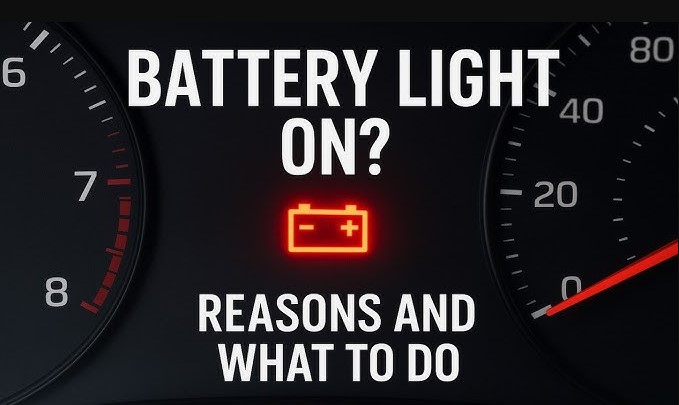
Your car’s battery light isn’t just a nuisance – it’s a signal that something’s wrong with your charging system. This warning light, usually shaped like a battery or alternator symbol, appears when your vehicle detects an electrical issue that could leave you stranded. Ignoring it can lead to a dead battery, electrical failures, or even damage to your engine control unit. Understanding what triggers this light and acting fast can save you time, money, and stress.
Imagine you’re cruising down the highway on a sunny afternoon in 2026, music playing, air conditioning blowing, and all your tech running smoothly. Then without warning the dashboard lights up. Among them, the small battery-shaped icon glows amber or red.
Your heart skips a beat. Why is my battery light on? This moment of panic is more common than you think, especially as modern vehicles grow more complex. In today’s world, where every sensor, camera, and connected device depends on stable power, a flickering warning light can feel like a sign of impending doom.
But don’t hit the panic button just yet. The battery light often mistaken for a simple battery issue actually signals a problem within your vehicle’s charging system. That includes the alternator, battery, voltage regulator, and associated wiring.
While a dead battery will eventually cause the light to come on, the root cause might be deeper: a slipping belt, failing alternator diode, or even a software glitch in the 2026-model electronic control modules. Understanding what the light means, how to respond, and when to seek help can turn a scary moment into a manageable repair.
Key Takeaways
- The battery light indicates a problem with your vehicle’s charging system. It’s not just about the battery itself your alternator and related components are involved too.
- Common causes include a failing alternator, loose or corroded wiring, or a weak battery. Each has different symptoms and repair needs.
- Modern cars in 2026 use more electronics, making the charging system even more critical. A drop in voltage can affect everything from infotainment to engine performance.
- You can often diagnose the issue yourself with basic tools and observation. Checking belts, listening for unusual noises, and testing voltage are good first steps.
- Professional diagnosis is recommended if the problem persists. Advanced diagnostics can pinpoint hidden issues in hybrid or electric-assist systems.
- Preventive maintenance reduces the risk of unexpected failures. Regular inspections help catch wear before it becomes a roadside emergency.
- Addressing the issue early prevents total system failure. What starts as a simple belt replacement might become a costly rebuild if ignored.
What Does the Battery Light Actually Mean?
The battery light sometimes labeled “ALT” (for alternator) or “GEN” (generator) is part of your car’s check engine light system, but it focuses specifically on the electrical supply chain. When it comes on, your vehicle’s computer (ECU) has detected that the voltage being generated to charge the battery doesn’t match expected levels. Think of it like a smoke alarm for your car’s power grid.
In most cases, the light means one thing: your alternator isn’t delivering enough power. The alternator converts mechanical energy from the engine into electrical energy. Without it, the battery drains quickly, and your car may stall. But here’s the twist: in 2026, many new vehicles use mild-hybrid or regenerative braking systems that rely heavily on consistent voltage. Even a brief dip can trigger the light and disrupt performance.
How the Charging System Works
Let’s break it down simply. Your battery provides startup power. Once the engine runs, the alternator takes over. It’s connected via a drive belt and generates electricity to:
– Recharge the battery
– Power headlights, radio, climate control
– Support advanced driver aids (like lane assist or adaptive cruise control)
A faulty alternator or broken belt interrupts this flow. If the ECU senses less than ~12.4 volts at idle (or below 13.7 volts when running), it triggers the warning. In 2026 models, some systems also monitor voltage ripple tiny fluctuations that can damage sensitive electronics over time.
Top Causes of a Battery Light in 2026 Models
While older cars had simpler electrical systems, today’s vehicles require more precision. Here are the most likely culprits when why is my battery light on flashes in your 2026 sedan or SUV:
1. Failing Alternator
This is the #1 reason. Over time, alternator brushes wear out, diodes fail, or internal windings degrade. Symptoms include dimming headlights, slow wipers, or a whining noise from under the hood. In 2026, many alternators are integrated with smart regulators that self-diagnose but if they detect internal faults, they’ll alert the ECU.
2. Worn or Slipping Drive Belt
The serpentine belt connects the engine to the alternator. If cracked, loose, or misaligned, it won’t spin the alternator properly. You might hear squealing, especially when turning on accessories like AC or heated seats. Some 2026 models use automatic tensioners, but even those can fail.
3. Corroded or Loose Battery Connections
Even a slightly dirty terminal can prevent proper current flow. Corrosion looks like white or green crust around the posts. Loose cables vibrate loose, especially on bumpy roads. Try cleaning terminals with baking soda and water, then tightening securely.
4. Faulty Voltage Regulator
Modern alternators have built-in regulators, but if they malfunction, voltage can spike or drop. This damages the battery and other electronics. Rare, but serious.
5. Weak or Old Battery
Aging batteries lose capacity. If yours is over 5 years old, it may not hold a charge well, tricking the system into thinking the alternator is underperforming. Most 2026 vehicles recommend replacing batteries every 4–6 years.
6. Software Glitches or Sensor Errors
Newer cars use CAN bus networks where multiple modules communicate. A corrupted message or faulty sensor reading can falsely trigger the light. A simple OBD-II reset might clear it.
Can You Drive With the Battery Light On?
Short answer: It depends. If the light came on briefly and went off while driving normally, you might be fine—especially if you’re near a mechanic. But if it stays lit, avoid long trips. Your car may lose power steering, braking assistance, or even fail to start.
In 2026, many vehicles enter limp mode when electrical issues arise, reducing performance to protect critical systems. Still, driving without knowing the cause risks getting stranded. If you notice flickering lights or difficulty starting, pull over safely and call for help.
Safety First: What to Do Immediately
1. Turn off non-essential electronics (radio, AC, seat heaters).
2. Check the battery terminals for looseness or corrosion.
3. Listen for unusual sounds from the engine bay.
4. If unsure, stop driving and consult a professional.
DIY Diagnosis: Should You Try It Yourself?
If you’re handy, diagnosing the battery light can save hundreds in labor costs. Here’s how:
Step 1: Test the Battery Voltage
Use a multimeter:
– With engine off: should read 12.4–12.7 volts.
– With engine running: should be 13.7–14.7 volts.
If it’s below 13.0V while running, the alternator isn’t charging properly.
Step 2: Inspect the Belt
Look for cracks, fraying, or looseness. Press firmly – it shouldn’t deflect more than ½ inch. If it feels floppy, replace it.
Step 3: Check for Error Codes
Plug an OBD-II scanner into your port (usually under the dash). Pull codes like P0562 (low system voltage) or P0620 (alternator control circuit).
Pro Tip:
Many 2026 vehicles store historical data. Use a scan tool to view real-time voltage graphs. A steady drop during acceleration? Bad alternator.
When to Call a Mechanic (And Why It Matters)
DIY fixes work for minor issues like loose cables or a worn belt. But if:
– The alternator is failing internally
– There’s a wiring fault
– Your car has a hybrid powertrain
…then professional help is essential. Modern systems use high-frequency switching and sensitive components. Incorrect repairs can void warranties or cause further damage.
Also, some 2026 models feature predictive maintenance alerts linked to cloud-connected service centers. These can remotely diagnose issues before they escalate – if your car is registered and updated.
Cost Estimates (2026 Average)
– Belt replacement: $80–$150
– Alternator rebuild: $200–$400
– Full alternator replacement: $400–$800
– Battery test/replacement: $100–$200
Labor adds $50–$100/hour depending on shop rates.
Prevention Tips for 2026 Vehicle Owners
Avoid surprises by following these habits:
- Get annual electrical inspections, especially before road trips.
- Keep battery terminals clean and check cable tightness monthly.
- Replace belts every 60,000 miles or as recommended in your owner’s manual.
- Monitor dashboard warnings immediately don’t assume it’s “just the battery.”
- Update your vehicle’s software via dealership recalls or mobile updates.
Remember: in 2026, your car’s intelligence is growing. But it still relies on reliable power. Treat the battery light seriously—it’s not a suggestion; it’s a heads-up.
Frequently Asked Questions
Why did my battery light come on and go off quickly?
This could indicate a temporary voltage dip, possibly due to a loose connection or a momentary alternator slip. In 2026 models, short glitches are sometimes logged and cleared automatically. However, if it happens repeatedly, have the charging system inspected.
Can a bad battery cause the battery light to stay on?
Yes. An aging battery may not hold sufficient charge, causing the alternator to work harder. If it can’t keep up, the ECU detects low voltage and triggers the light. Testing both the battery and alternator is key.
Is it safe to drive if the battery light is on?
Driving briefly is possible, but risky. If the alternator fails completely, you’ll lose power to critical systems. Pull over safely if lights dim or the car struggles. Modern 2026 vehicles may enter reduced-power mode, but prolonged driving without charging is dangerous.
How much does it cost to fix a battery light issue?
It varies widely. A simple belt fix starts around $80, while a full alternator replacement can reach $800. Battery testing is often free with an inspection. Always get a diagnostic first to avoid unnecessary repairs.
Can I jump-start a car with the battery light on?
Temporarily, yes—but only if the alternator isn’t working. If it is functional, jumping may overload the system. After jump-starting, drive the car for at least 20 minutes to allow the alternator to recharge the battery fully.
Will disconnecting the battery reset the light?
Not reliably. In 2026 vehicles, persistent issues require diagnosis. While a reset might clear temporary codes, the underlying problem remains. Always address the root cause rather than masking symptoms.