
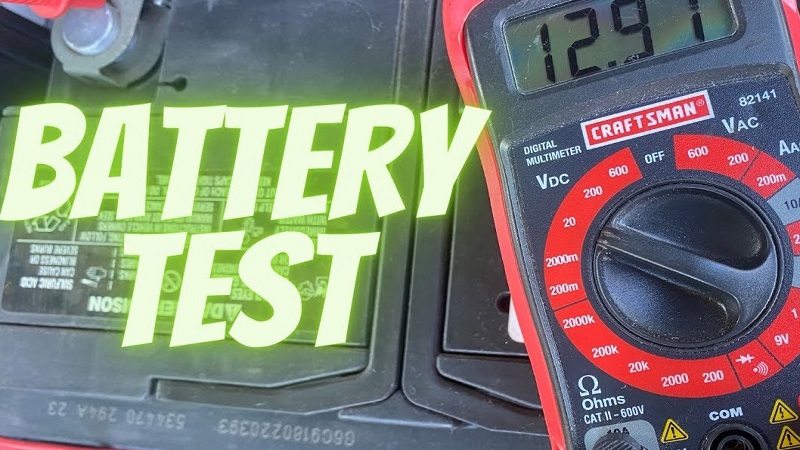
Checking your car battery with a multimeter is a simple, cost-effective way to prevent unexpected breakdowns and vehicle starting issues. By following our step-by-step guide, you can accurately measure your battery’s voltage and determine if it needs a charge, a jump-start, or a full replacement.
Have you ever turned your key or pressed that start button only to be met with that dreaded clicking sound? It is the most frustrating feeling, especially when you have somewhere important to be. We have all been there.
Most of the time, the culprit is a battery that has simply lost its spark. Instead of rushing to a mechanic and paying for a diagnostic fee, you can easily learn how to check a car battery with a multimeter right in your own driveway.
In 2026, vehicle technology is more advanced than ever, but the basic lead-acid or AGM battery remains the heart of your car’s electrical system. Understanding how to check a car battery with a multimeter is a fundamental skill for any car owner. It empowers you to take control of your vehicle’s maintenance and saves you from the stress of being stranded. This guide will walk you through the process, keeping things simple, safe, and effective.
Key Takeaways
- Safety First: Always wear protective gear and ensure the engine is off to prevent electrical shorts or injury while handling the battery.
- Voltage Benchmarks: A fully charged 12-volt battery should read approximately 12.6 to 12.7 volts when the engine is resting.
- Testing Methods: You can test the battery in two states: resting (engine off) and under load (engine cranking) to get a full health report.
- Multimeter Setup: Always set your digital multimeter to the DC Voltage setting (usually marked with a V and a straight line) to avoid inaccurate readings.
- Common Symptoms: Slow engine cranks, dim headlights, and clicking sounds are clear signs that you need to perform a battery check immediately.
- Environment Matters: Extreme 2026 climate conditions can accelerate battery degradation; testing regularly helps mitigate these environmental impacts.
Understanding the Basics of Battery Voltage
Before you dive into the technical steps, it helps to understand what you are actually looking for. Your car battery stores chemical energy and converts it into electrical energy. When you use a multimeter, you are measuring the “potential difference” or voltage between the positive and negative terminals. Think of it like checking the water pressure in a pipe; if the pressure is too low, the system just won’t work correctly.
What the Numbers Mean
When you learn how to check a car battery with a multimeter, you need to know your target numbers. A healthy, fully charged battery will show a reading of about 12.6 to 12.7 volts when the car is completely off. If your meter shows 12.4 volts, your battery is at about 75% capacity. If it drops to 12.2 volts, you are looking at roughly 50%. Anything below 12 volts usually means the battery is either deeply discharged or starting to fail internally.
Why Multimeters Are Better Than Guesswork
Some people rely on jump-starting their car and “hoping for the best.” This is a risky strategy. By using a multimeter, you can distinguish between a battery that just needs a charge and one that can no longer hold a charge. This distinction is vital because a bad battery can strain your alternator, leading to even more expensive repairs down the road.
Preparing for the Test
Before you even touch the multimeter, safety is your top priority. Car batteries contain acid and can produce flammable gases. Work in a well-ventilated area, and make sure your car is parked on a flat surface with the parking brake engaged. You do not need to be an electrician to do this, but you do need to be careful.

Tools You Will Need
To learn how to check a car battery with a multimeter, you only need two things: a basic digital multimeter and a pair of work gloves. If your battery terminals are covered in white, crusty corrosion, you might also want a wire brush to clean them off. A good connection is essential for an accurate reading. If the probes can’t touch the metal, you won’t get a clear signal.
Setting Up Your Multimeter
Digital multimeters can look intimidating with all those dials, but we only need one setting. Turn the dial to the “DC Voltage” section. It is typically represented by a V with a straight line and sometimes a dashed line next to it. If your meter isn’t “auto-ranging,” set it to the 20V setting. This is the perfect range for a standard 12-volt car battery.
Step-by-Step: The Resting State Test
The first test is the “resting” test. This tells you how much charge is sitting in the battery without any outside interference. This is the most common way to check a car battery with a multimeter. Ensure your headlights, interior lights, and radio are all turned off. If the car was running, let it sit for about ten minutes to let the “surface charge” dissipate.
Connecting the Probes
Identify the positive terminal (marked with a red + sign or a plastic red cover) and the negative terminal (marked with a black – sign). Take the red probe from your multimeter and touch it to the positive terminal. Take the black probe and touch it to the negative terminal. You should see a number appear on your screen almost immediately.
Reading the Result
If you see a solid 12.6, congratulations! Your battery is in great shape. If you see a negative number on the screen, don’t panic. It just means you swapped the probes. Simply move the red probe to the negative side and the black to the positive. If the voltage is significantly lower than 12.2, your battery is likely struggling to hold a charge and may need to be replaced soon.
Testing Under Load (The Cranking Test)
Sometimes, a battery looks fine when sitting still but fails as soon as you turn the key. This is because the battery cannot handle the “load” of the starter motor. Knowing how to check a car battery with a multimeter under load is the best way to catch a hidden failure.
How to Perform the Crank Test
This test is much easier if you have a friend helping you. Connect your multimeter probes to the terminals just as you did before. Now, watch the screen while your friend turns the ignition to start the car. The voltage will naturally drop when the starter motor engages. This is totally normal.
Interpreting the Crank Drop
If the voltage drops below 10 volts during the crank, that is a red flag. It means the battery doesn’t have enough “oomph” to push the engine over. A healthy battery should generally stay above 10 volts even while working hard. If it drops to 8 or 9 volts, the battery is on its way out, and you should consider a replacement as soon as possible.
The Charging System Test
Sometimes, the problem isn’t the battery it’s the alternator. If your battery keeps dying, it might not be a “dead” battery at all; it might be a battery that isn’t being charged while you drive. Once the engine is running, your alternator should be pumping power back into the battery.
Checking the Alternator
With the engine idling, use your multimeter again on the battery terminals. You should now see a reading between 13.5 and 14.5 volts. This higher number shows that the alternator is successfully sending power to the battery. If you see the same number you saw when the engine was off (like 12.6), your alternator is likely not charging the system correctly.
Common Troubleshooting Tips
If you find strange readings, check your connections first. A loose terminal can cause a drop in voltage even if the battery is brand new. Tighten any loose nuts on the battery clamps. If your multimeter is still giving erratic numbers, try cleaning the battery posts with a bit of baking soda and water, followed by a light scrubbing with a wire brush.
Conclusion: Maintaining Your Battery Health
Learning how to check a car battery with a multimeter is one of the most useful skills for any driver. It removes the mystery from vehicle maintenance and helps you diagnose problems before they turn into emergencies.
By performing these simple tests the resting test, the crank test, and the charging test you can get a complete picture of your car’s electrical health. Remember that even the best batteries don’t last forever. Most modern batteries have a lifespan of three to five years.
If you find yourself needing to jump-start the car regularly, or if your multimeter consistently shows low voltage even after driving, it is time to visit an auto parts store for a new battery. Taking care of your battery today ensures that your car will be ready for all your adventures in 2026 and beyond.
Frequently Asked Questions
How often should I check my battery?
It is a good practice to check your battery health at least twice a year, especially before the start of extreme summer or winter seasons. Regular checks allow you to spot degradation before the battery fails completely.
Can a multimeter fix a dead battery?
No, a multimeter is strictly a diagnostic tool used to measure voltage and provide information about the battery’s condition. It cannot charge the battery or repair internal electrical damage.
What if I see a reading of 0 volts?
A reading of 0 volts typically indicates a completely dead battery or a broken connection between the probes and the terminals. Ensure your multimeter is set to the correct mode and that you are making solid contact with the metal posts.
Do I need to disconnect the battery to test it?
For standard voltage tests, you do not need to disconnect the battery. In fact, keeping it connected allows you to test the charging system while the engine is running.
Is a higher voltage reading always better?
Not necessarily. While 12.6V is ideal for a resting battery, a reading significantly higher than 15V while the engine is running could indicate an overcharging issue with your alternator. This can damage the battery, so ensure your readings stay within the normal 13.5V to 14.5V range.
Why does my battery pass the resting test but fail to start the car?
This is likely a sign of “surface charge” or high internal resistance. The battery might show enough voltage at rest, but it cannot deliver the high current (Amps) required to turn over the engine, which is why the crank test is so important.