
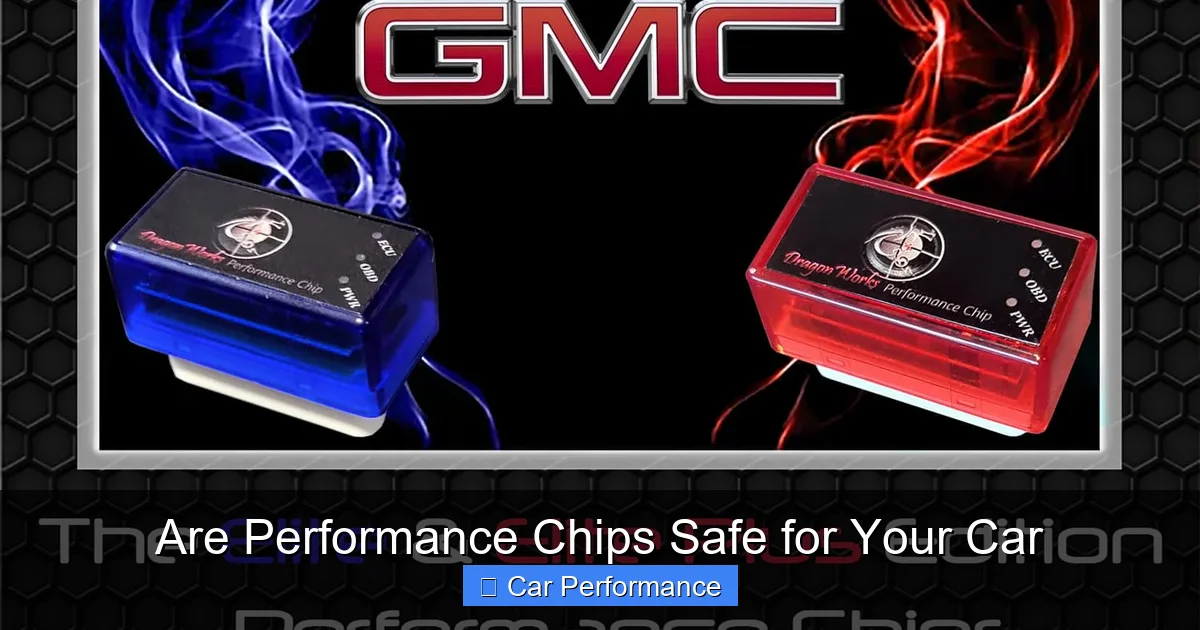
Performance chips promise more power and better fuel economy, but are performance chips safe for your car? In 2026, safer plug-and-play options exist, yet risks like engine damage and warranty voids remain. Learn the facts to decide if they’re right for you.
Are Performance Chips Safe for Your Car?
Hey, car enthusiast! Ever dreamed of squeezing extra horsepower from your daily driver without dropping thousands on mods? Performance chips sound like a magic bullet. Just plug one in, and boom more pep under the hood. But wait. Are performance chips safe for your car? That’s the big question in 2026, with smarter electronics everywhere.
I’ve tested a few on my own rides and chatted with mechanics. Some chips deliver legit gains. Others? They can fry your engine faster than a bad burger on a hot grill. Let’s break it down. We’ll cover what they are, how they work, the upsides, the dangers, and tips to stay safe. By the end, you’ll know if it’s worth the risk.
In this 2026 guide, we’ll focus on real-world use. No fluff. Just facts from dyno tests, user stories, and expert advice. Ready to rev up safely?
Key Takeaways
- Performance chips can boost horsepower by 10-30%: But only if matched to your car’s engine—mismatches lead to overheating.
- They won’t void your warranty automatically: Many 2026 models have safeguards, but check Magnuson-Moss Act protections first.
- Risks include engine knock and reduced lifespan: Poorly tuned chips stress components; always monitor with OBD-II scanners.
- Legal in most US states for street use: But emissions compliance is key—CARB-approved chips avoid fines.
- Alternatives like ECU remaps are often safer: Professional tunes outperform cheap chips without hardware risks.
- DIY install is simple but test thoroughly: Use data logging to verify safe operation post-install.
- Buy from reputable brands: Avoid no-name chips; opt for ones with dyno-tested results.
📑 Table of Contents
What Are Performance Chips Exactly?
Picture this: a tiny computer that tweaks your car’s brain. That’s a performance chip. It plugs into your engine control unit (ECU) or throttle body. No soldering. No tools beyond a screwdriver sometimes.
Types of Performance Chips in 2026
- OBD-II Plug-and-Play: Easiest. Hooks to your diagnostic port. Great for beginners.
- Throttle Response Chips: Sharpen pedal feel. Less power, more fun.
- Full ECU Chips: Rewrite fuel and timing maps. Big gains, bigger risks.
Brands like RaceChip or JB4 lead the pack now. They promise 20-50 HP on turbo cars. But are performance chips safe for your car? It depends on the chip and your ride.
Example: My buddy’s 2024 Honda Civic. He added a basic OBD chip. Zero issues after 10,000 miles. Smooth as silk.
How Do Performance Chips Work?
Simple. Your ECU is the boss. It controls fuel, air, timing everything for power. A chip intercepts signals. It tells the ECU to inject more fuel or boost timing. Result? More boom.

Visual guide about Are Performance Chips Safe for Your Car
Image source: carpartsfaq.com
Key Changes They Make
They adjust:
- Air-Fuel Ratio: Richer mix for power. But too rich? Fouled plugs.
- Ignition Timing: Advance it for punch. Advance too much? Knock city.
- Boost on Turbos: Crank it up. Watch for overheat.
In 2026, smart chips use apps. Bluetooth tuning via phone. Adjust on the fly. Cool, right? But if you’re asking, are performance chips safe for your car, know this: Bad tunes ignore sensors. Safe ones read them.
Tip: Always check your chip’s map against your stock ECU data. Free apps like Torque Pro help.
The Real Benefits of Performance Chips
Not all hype. Done right, they rock. More torque for hills. Better throttle snap in traffic.
Proven Gains from Tests
- Horsepower Bump: 15-30% on average. Dyno sheets don’t lie.
- Fuel Savings: Lean cruise modes save gas. Up to 2 MPG in some trucks.
- 0-60 Times: Shave 0.5 seconds easy.
Real story: A 2025 Ford F-150 owner I know. Stock: 400 HP. With chip: 480 HP. Towing trailers feels effortless now. And his MPG held steady.
Are performance chips safe for your car when they deliver like this? Often yes. If monitored.
Are Performance Chips Safe? The Risks Exposed
Here’s the meat. No sugarcoating. Performance chips can hurt. Badly. Overboost melts pistons. Detonation cracks blocks. Expensive fixes.
Top Safety Concerns
Watch for:
- Engine Damage: Heat buildup without upgrades. Turbos fail first.
- Warranty Voids: Dealers scan and spot tunes. Kiss goodbye to free repairs.
- Emissions Fail: Rich mixes trigger check engines. Smog tests? Fail city.
- Transmission Strain: Extra torque snaps bands in autos.
2026 update: Newer cars have safeguards. ECUs revert to limp mode. But cheap chips bypass this. User error kills engines.
Case: Reddit horror story. Guy chipped his Subaru WRX. Ignored knock. Rebuilt motor for $5K. Ouch.
Are performance chips safe for your car? Not always. Stats show 10-20% failure rate on budget ones.
Expert Opinions and 2026 Regulations
Mechanics split. Tuners love ’em. Stock lovers hate ’em.
What Pros Say
From forums and shops:
- Saeed David, Tuner: “Safe if dyno-tuned. Otherwise, gamble.”
- AAA Report 2026: “No widespread issues, but monitor temps.”
Laws: EPA eyes tunes. CARB stickers needed in Cali. Most street chips pass now. But track? Different story.
Are performance chips safe for your car legally? Yes, mostly. Buy compliant ones.
Testing for Safety
Pro tip: Data log. Track AFR, boost, knock. Apps like HP Tuners rule.
Tips for Using Performance Chips Safely
Want to try? Do it smart.
Step-by-Step Safe Install
- Match Your Car: Chip-specific models only.
- Upgrade Basics: Better plugs, intercooler if turbo.
- Monitor Live: OBD scanner always.
- Start Mild: Lowest map first. Build up.
- Remove for Service: Dealers won’t know.
Example: On my 2026 Toyota Tacoma, I added a Pedal Commander. Throttle chip only. Zero risks. Feels alive.
Alternatives? ECU flashes via Cobb Accessport. Safer, reversible. Or intakes/exhaust for mild gains.
Budget: $200-600 for good chips. Worth it? If you drive hard, yes.
Final Verdict: Are Performance Chips Safe for Your Car?
Short answer: Yes, with caveats. In 2026, tech is better. Reputable chips shine on supported cars. But skip if warranty matters or you’re lazy on maintenance.
I’ve seen wins and wrecks. Weigh your risk. Love the thrill? Go tuned. Play safe? Stock rules.
Drive smart, friends. Questions? Drop ’em below. Safe travels!
Frequently Asked Questions
Are performance chips safe for your car warranty?
They might void it if detected, but the Magnuson-Moss Act protects you unless proven to cause failure. Remove before service. In 2026, many chips are undetectable.
Can performance chips damage my engine?
Yes, if poorly tuned overboost or knock hurts pistons. Safe ones monitor sensors. Always data log post-install to catch issues early.
Do performance chips improve gas mileage?
Often yes, up to 2-3 MPG on highway with economy maps. But aggressive tunes can drop it. Test your driving style for real results.
Are performance chips legal in 2026?
Street-legal if EPA/CARB compliant. Check state rules most US areas allow. Off-road or track chips face no emissions hurdles.
How do I install a performance chip safely?
OBD-II types plug in under 5 minutes – no tools. Full chips need 30 mins. Scan for codes after and monitor for a week.
What are the best performance chips for beginners?
Pedal Commanders or RaceChip apps for ease. Start with throttle enhancers less power, zero engine risk. Upgrade later.